Introducing the Multisensory Imagination Method (MIM) developed in the course of the artistic-research project Sensing Living Systems
Abstract
This paper refers to the lecture performance “Nature After Nature – A Multisensory Medley for Systems Awareness,” based on the “Multisensory Imagination Method” (MIM), developed as part of our interdisciplinary artistic research project Sensing Living Systems (SLS). Based on General Systems Theory (GST) and posthumanist thinking, the SLS-project explores the potential of multisensory scenography and employs it – including sound, smell, touch and movement – to cultivate systems awareness and, with it, ecological and more-than-human consciousness. Over iterative studies, audiences shift from observers of material installations to co-creators in immersive environments and to participants in the artistic research process. The medley presented at CARPA9 integrates excerpts from these works into a sustainable multisensory performance format based on imagination rather than extensive material setups. By blurring boundaries between theory, performance, and lived sensory experience, the project demonstrates how artistic research can render systemic interconnectedness experientially tangible.
Context
Sensing Living Systems (SLS)
Our artistic research project Sensing Living Systems – Exploring the Potentials of Multisensory Scenography for Systems Awareness is based at the AIL Angewandte Disciplinary Lab / University of Applied Arts Vienna and funded by the Austrian Science Fund (FWF / PEEK). Living systems, from cells to ecosystems, operate as interconnected networks. A deep understanding of systems is crucial to solving complex problems, making better decisions, anticipating future developments, and coping with change and creating a sustainable future. It is important to understand that everything in our world is part of a larger system and is interrelated, from biological cells, humans and animals to trees and governments. According to Senge (1990), humans have an innate capacity to perceive systems and their interdependencies, but this is often suppressed by linear thinking and mechanistic worldviews. Meadows (2008) likewise emphasizes that systems cannot be reduced to their parts, but must be understood through their interconnections, feedbacks, and emergent dynamics. The SLS project aims to promote a system-oriented, organismic worldview, which in turn favours a more-than-human perspective, that highlights that humans are never separate from, nor superior to the rest of life. It shifts attention from a mechanistic and anthropocentric worldview to one that recognizes the entanglement and agency of other beings, forces, and ecologies that co-constitute our existence.
SLS basically refers to GST, developed by Maria and Ludwig von Bertalanffy (1968). GST is an interdisciplinary framework that seeks to identify common principles across all types of systems. It applies to open (living) systems that interact with their environment, enabling self-organization, adaptation, and the pursuit of goals. The theory offers a universal framework for understanding complex systems across various disciplines.
Posthumanism and GST
GST may be regarded as an important antecedent to posthumanist thought, insofar as it challenges reductionist epistemologies. Both frameworks share a relational ontology that decentres the human subject and situates it within broader networks of ecological, social, and technological systems. GST conceptualizes living beings as open systems in dynamic relation to their environments (Bertalanffy 1968). Posthumanism, by contrast, translates similar systemic insights into cultural critique, dismantling anthropocentrism and foregrounding entanglements between humans, nonhumans, and technologies (Braidotti 2013; Haraway 2016). A key point of convergence lies in their rejection of human exceptionalism. For Bertalanffy humans are subsystems of the biosphere without ontological primacy, while posthumanist thinkers highlight the agency of animals, plants, and technical artefacts (Ferrando 2019). Both perspectives also generate an ethics of relationality: interventions in one system reverberate across others, demanding responsibility and care beyond human boundaries.
SLS-performances and -scenographic studies – An overview
In the course of our artistic research project SLS, we create multisensory, performative poetic narratives, scenographic studies and performances, including exhibitions for diverse audiences and groups on different continents in order to promote awareness of complex systems and ecological interrelationship. We convey systemic and posthuman thinking through immersive experiences integrating smell, sound, and touch. On the occasion of the CARPA9 conference, we presented excerpts from these performances and scenographic studies – to present them as a kind of “medley” in the form of a multisensory lecture-performance – based on MIM – that serves as both, a research lecture and a sensory experience. Before describing and reflecting on our conference contribution, we would like to give an insight into the multisensory works of SLS:
The series of “Nature After Nature” performances and exhibitions
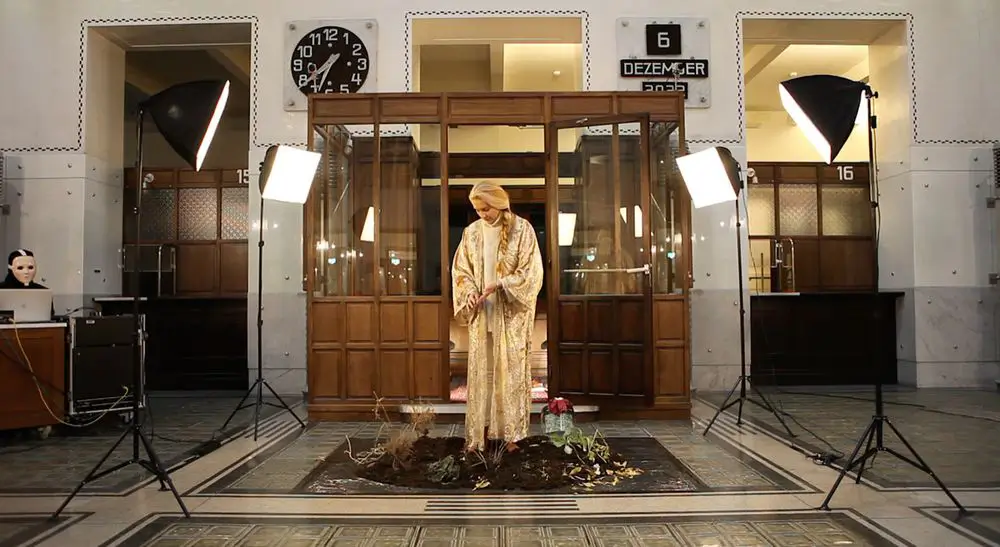
includes Touching Realities – Sensing the Invisible (Performance and Exhibition at Songkhla Art Center and Austrian Embassy Bangkok), Little School of R/Evolution (Exhibition and Performance Lecture at the University of Architecture and Art, Hanoi), Drawing Trees with Scent. Preparations for the Future: Forest bathing without trees (a performative funeral procession for collective olfactory memories) and the Soil Performance (both at AIL Vienna). In these works we combined ecological narratives with a multisensory scenography approach to encourage thinking in relationships, cycles / loops and networks, including non-human agencies. These artistic explorations encourage participants to shift their perception from isolated entities to interconnected structures in order to foster environmental and systems awareness that is crucial in light of today’s ecological challenges.
The previous parts of our “Series of Scenographic Studies”
at the AIL unfold as a six-part sequence of artistic research experiments between late 2023 and 2025. The AIL is publicly accessible, located in the former cashier hall at the Otto Wagner Postsparkasse, and welcomes over 400 diverse visitors per day. This enables us to conduct a wide variety of research and gather feedback in the form of interviews, questionnaires, observations and audience participation.
Each part of the Series of Scenographic Studies investigates how sensory modalities, spatial and material strategies, and degrees of audience participation can be orchestrated to probe questions of system perception, embodiment, and ecological entanglement. Rather than presenting static works, the series deliberately adopts scenographic practices as iterative research tools, foregrounding how visitors’ experiences, actions, and bodily involvement shape the epistemic and affective dimensions of each encounter.
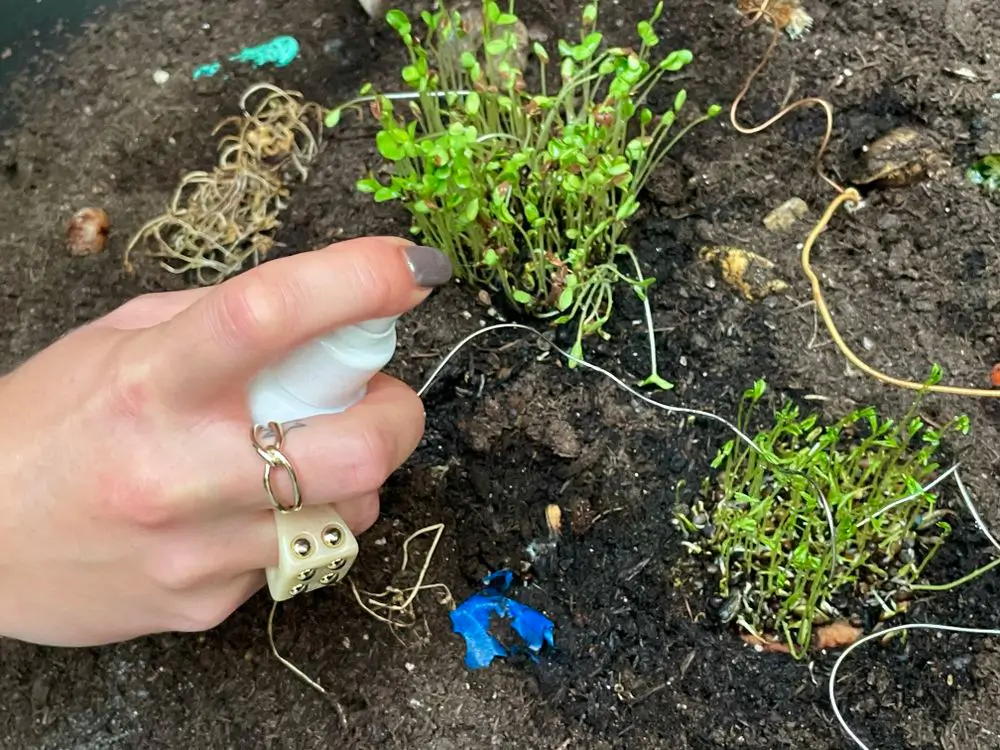
The first part, Am I A System? Where Are My Boundaries? (October–December 2023), centers on the notion of boundaries in living and non-living systems. Here, natural materials such as soil and seeds, combined with objects of human origin, form mutable installations in which participants are invited to shift, add, or remove elements. The emphasis lies on tactile, visual, olfactory, and spatial sensing, creating a material arena in which systemic boundaries are not only contemplated but directly manipulated. In this early phase, the role of participants is both exploratory and participatory, as they can intervene in the installation’s fragile equilibrium.
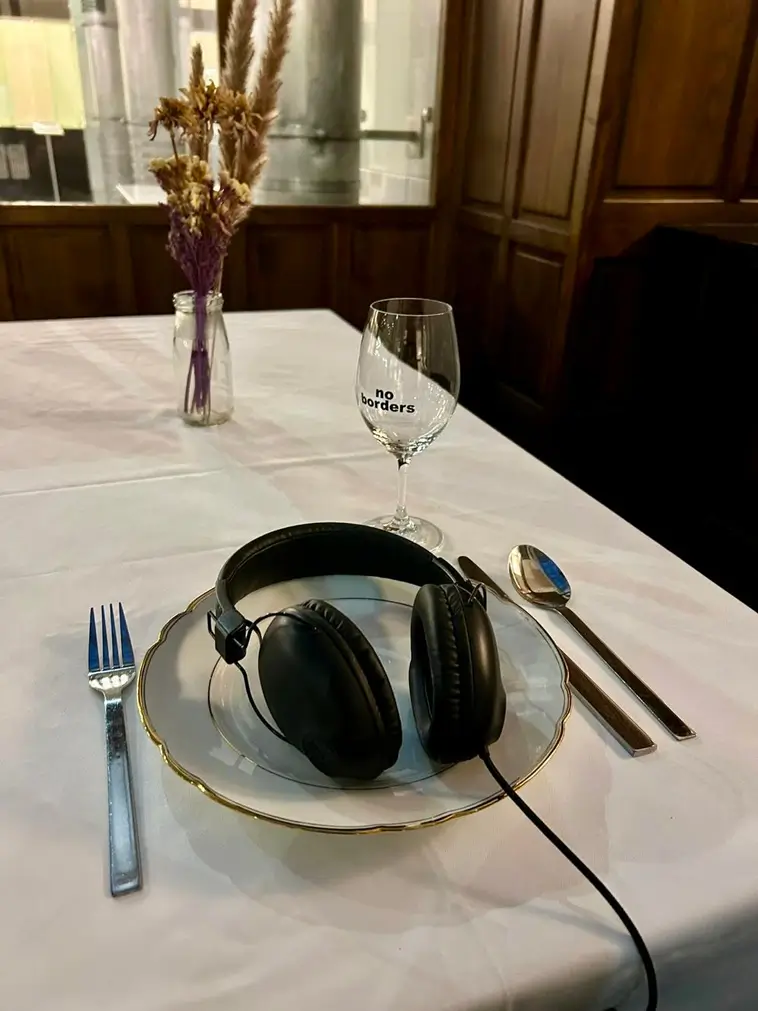
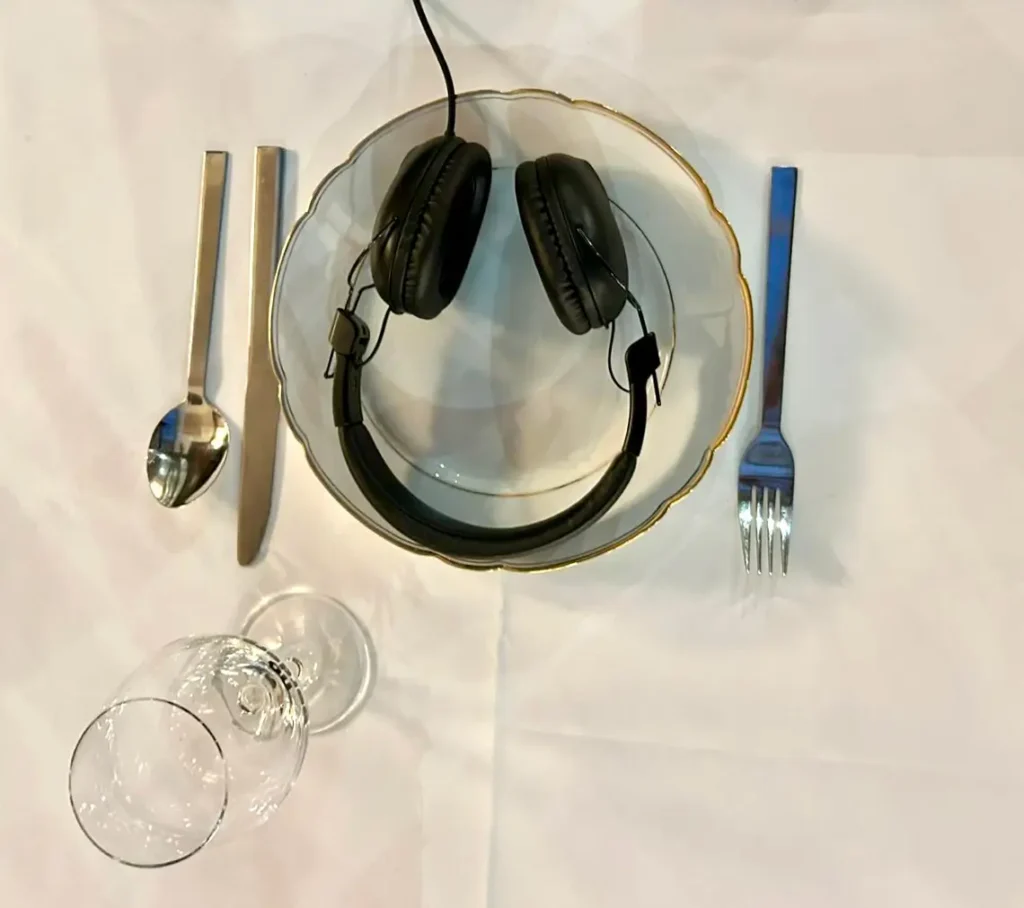
In the second part, Expanding System Boundaries (February–June 2024), the focus shifts toward sound as a primary medium. Visitors encounter immersive soundscapes designed to evoke memories, emotions, and affective resonances. The installation The Table and What If It Was All A Dream? (feat. Tuntun Taratawan Krue-On) stages auditory environments where individual and collective identity, belonging, and systemic interdependence are negotiated. Participation now involves not only sensory perception but also emotional recall and shared interpretation, suggesting that system boundaries are shaped as much by affect and memory as by material form.
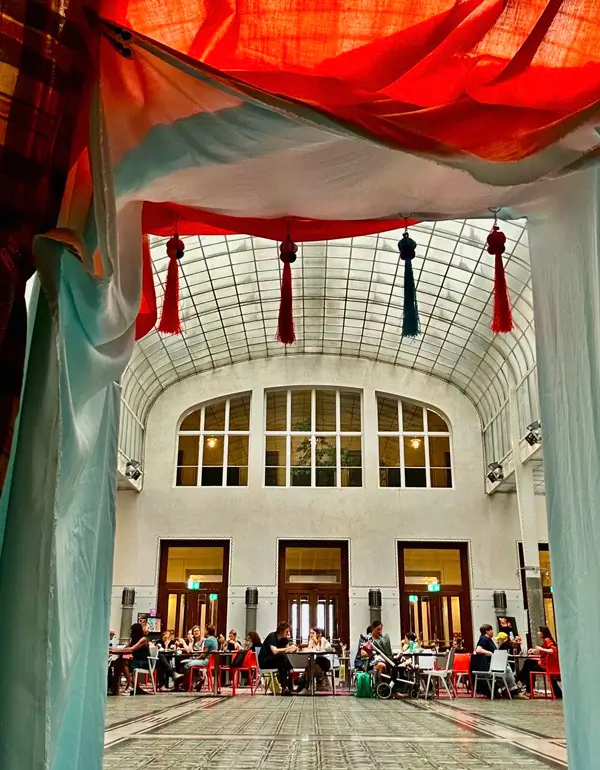
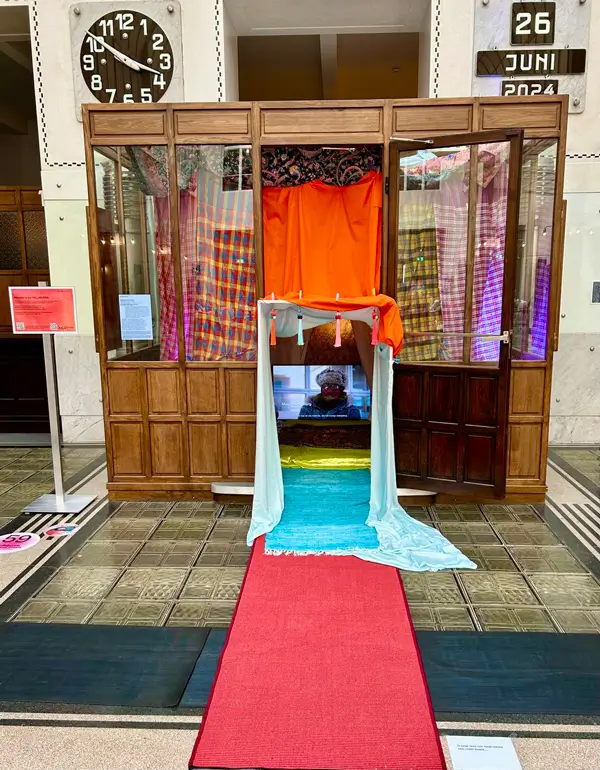
The third part, Hallabudda Reenactment (July–September 2024) introduces an atmosphere of protection, shelter, and co-presence. Fabrics, soft materials, scents, and dimmed light create a cocoon-like environment in which participants are encouraged to rest, reflect, and reconnect. Here, the tactile and olfactory senses are foregrounded. In contrast to the more experimental approaches of the earlier parts, Hallabudda (referring to the Ukrainian term for a sofa fortress, which not just children love to build) creates a space of comfort and collective coexistence in which systems awareness can arise through contemplation and meditation.
“Through meditation and art, we can connect with our mother earth and reaffirm our cooperative nature, recognizing the environment as part of ourselves.”
(Sivaraksa 2011.)

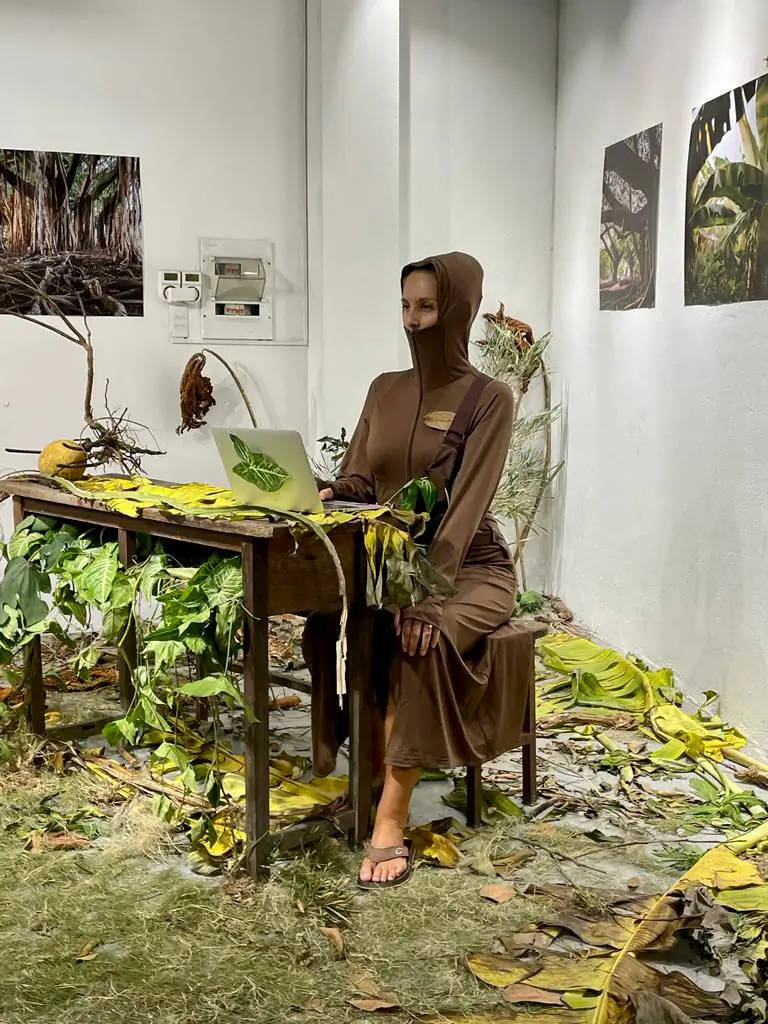
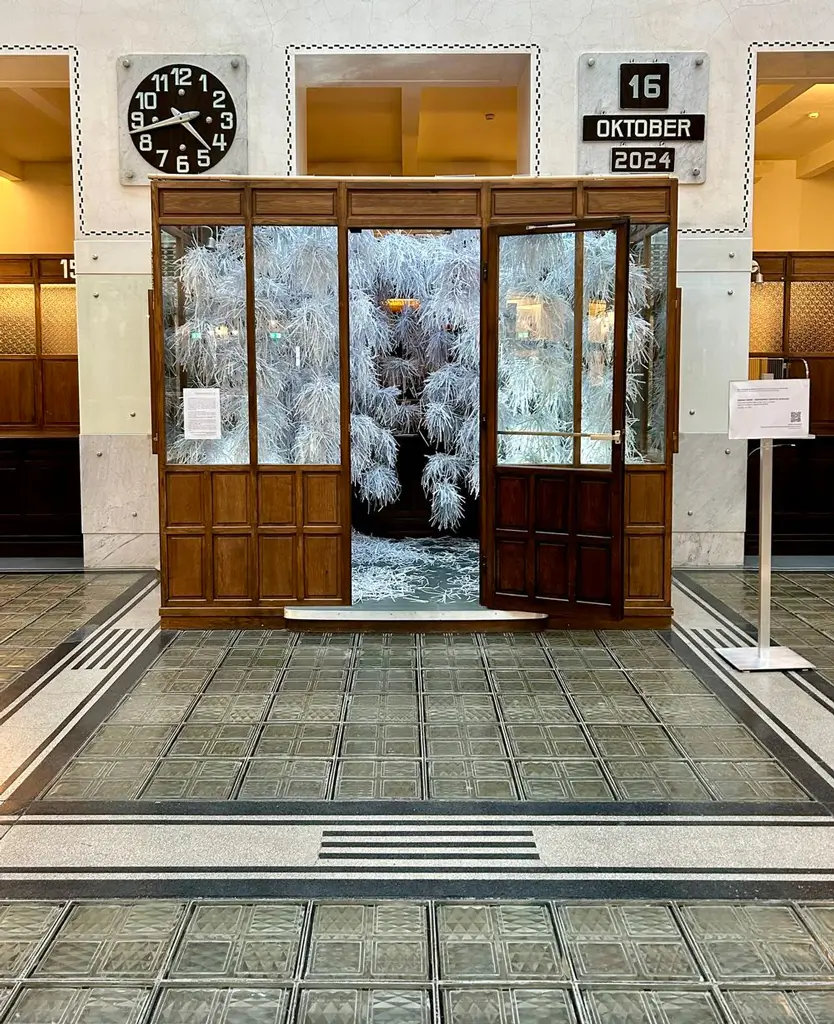
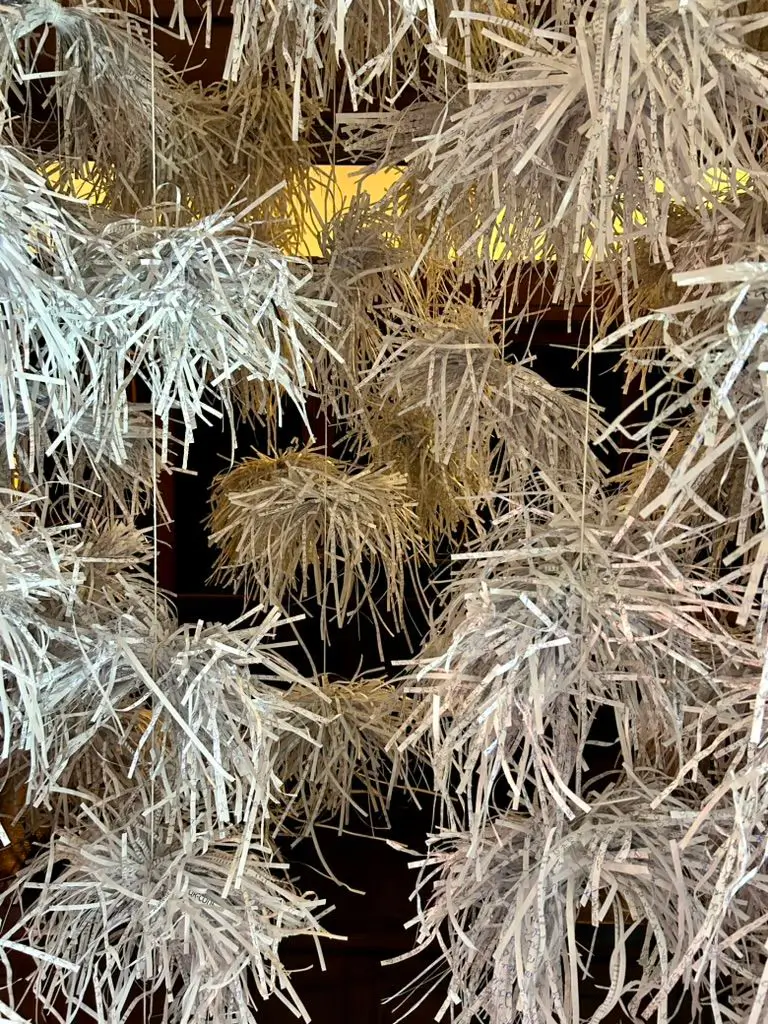
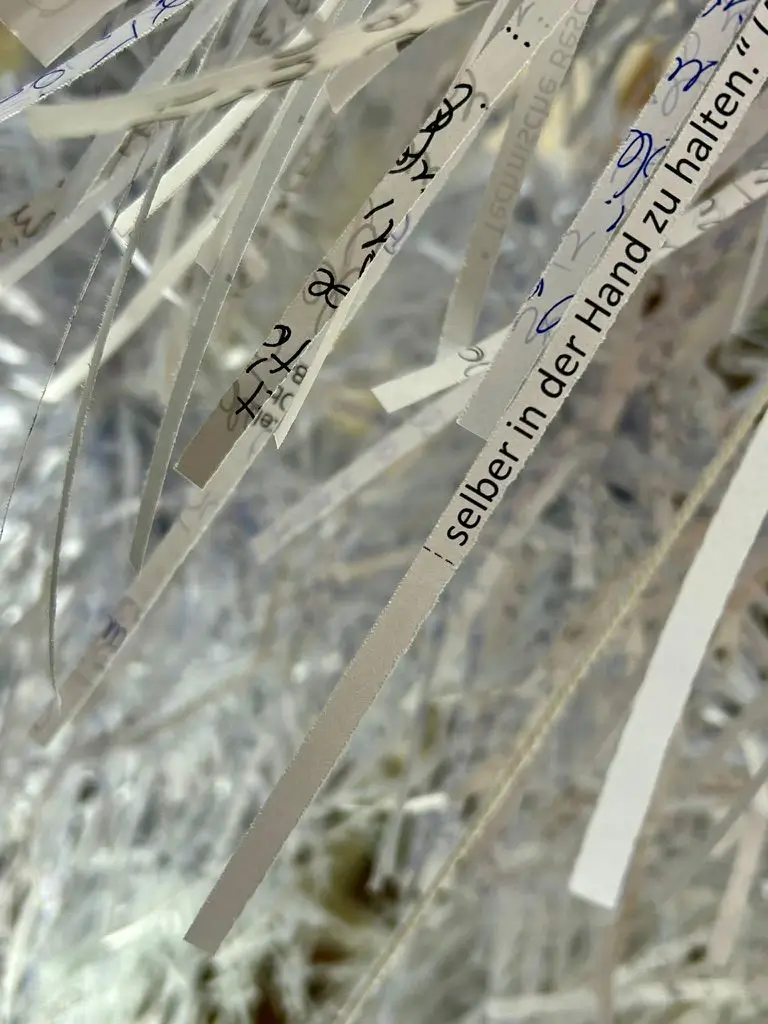
The fourth part, Sensing Theory – Shredding Cognitive Overload (October 2024–January 2025), critically addresses the dominance of conceptual and theoretical modes of knowledge. By staging a forest-like environment using shredded work/theory papers, strings, sound and scent it challenges audiences to experience systemic knowledge through embodied navigation rather than rational abstraction. This phase emphasizes that systemic thinking must be grounded in embodied, multisensory engagement rather than solely intellectual cognition, because we can only live and survive embedded in other living systems. We asked ourselves and the audiences: Do we value declarative knowledge too high? Are we too brainy and at the same time headless in the face of constant information overload? What do we have to unlearn? What do we have to let go of, to make wise, prosperous decisions? How do we enable ourselves to take compassionate, cooperative and caring actions that nurture both us and our world and our environments? What learned knowledge, what deeply anchored beliefs, and cognitive convictions can (should) we shredder to experience ourselves as thriving living systems? And to flourish together with other living systems?
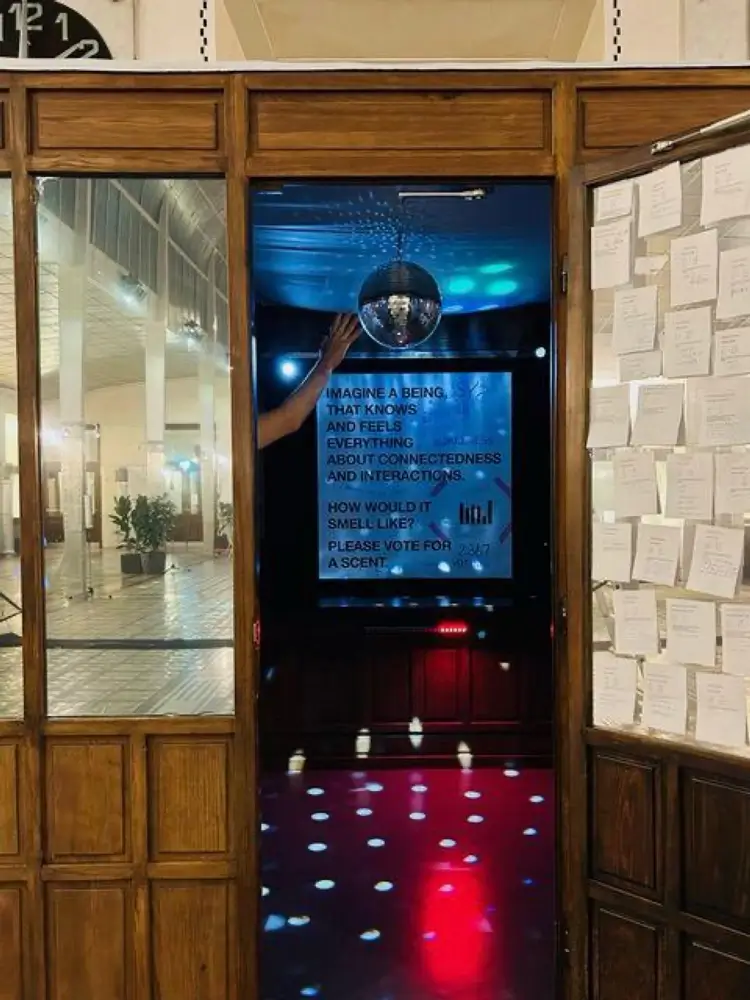
The fifth part, Conception of SŸS: The Smell of A Mythological Being (February–June 2025), explores olfactory imagination as a primary method for increasing systems awareness. Here, smell was not merely a sensory stimulus, but a conceptual and symbolic medium allowing participants to vote on a fleeting yet deeply affective marker. Conceived as an intercultural participatory experiment, it invited the audience to imagine the odor of a mythological being, a SΫS, embodying systems awareness.
SΫS emerged in the course of SLS as an entity at home in a complex, ever-changing world. An embodiment that copes with multiple developments and crises in the socio-, eco-, and techno-sphere, getting along with a wide variety of entities and people while contributing to the well-being of all. SΫS displays great joie de vivre and resilience; their entire body serves as an instrument for perceiving the situations they inhabit. Fully aware of being a sensitive living system embedded in and dependent on others, SΫS is also an acronym for Sensing Your Systems or Sensing Your Senses.
2,367 people took part in the scent-based vote, primarily at AIL Vienna, but also at MIT Boston, the SAR Artistic Research Conference in Porto, the Austrian Embassy in Bangkok, the Songkhla Art Centre (TH), and other temporary booths. Visitors responded to the prompt: “Imagine a being that knows and feels everything about connectedness and interactions. How would it smell like?” Voters chose one of six specially composed smells.
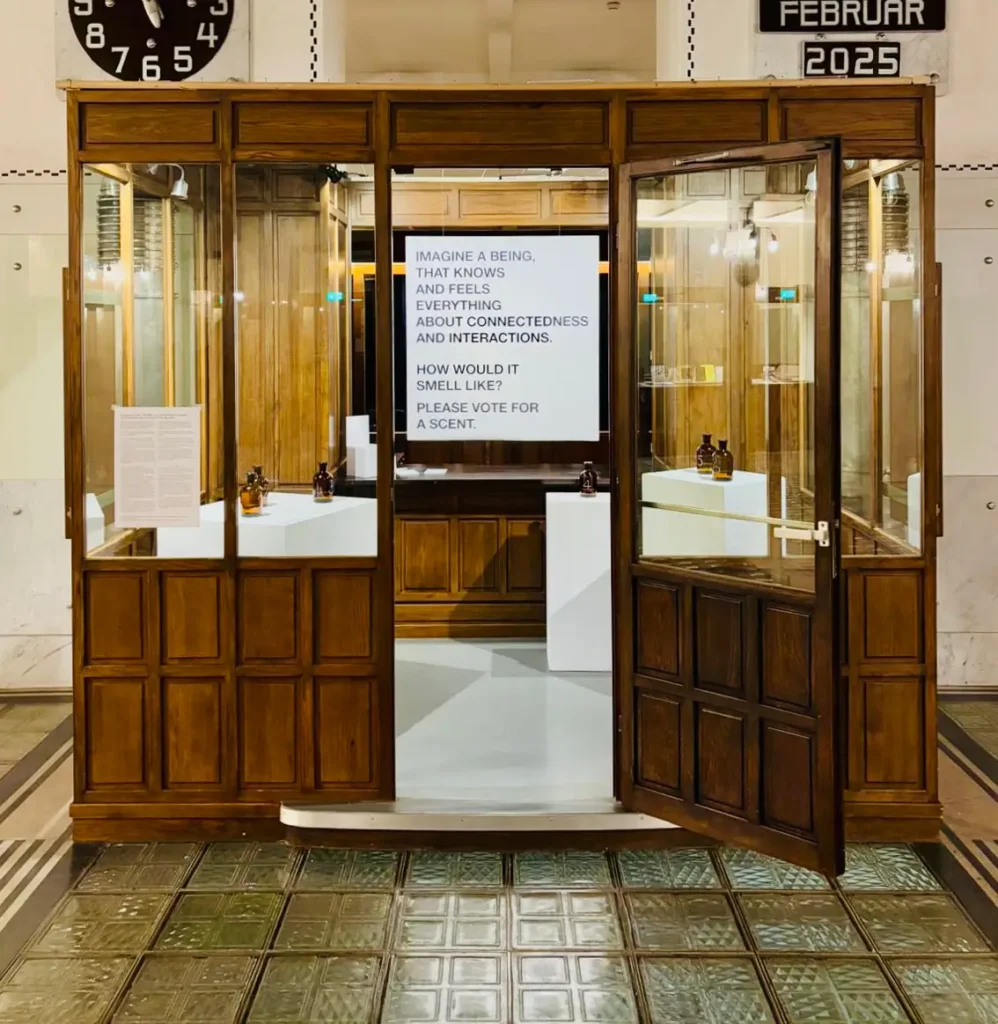
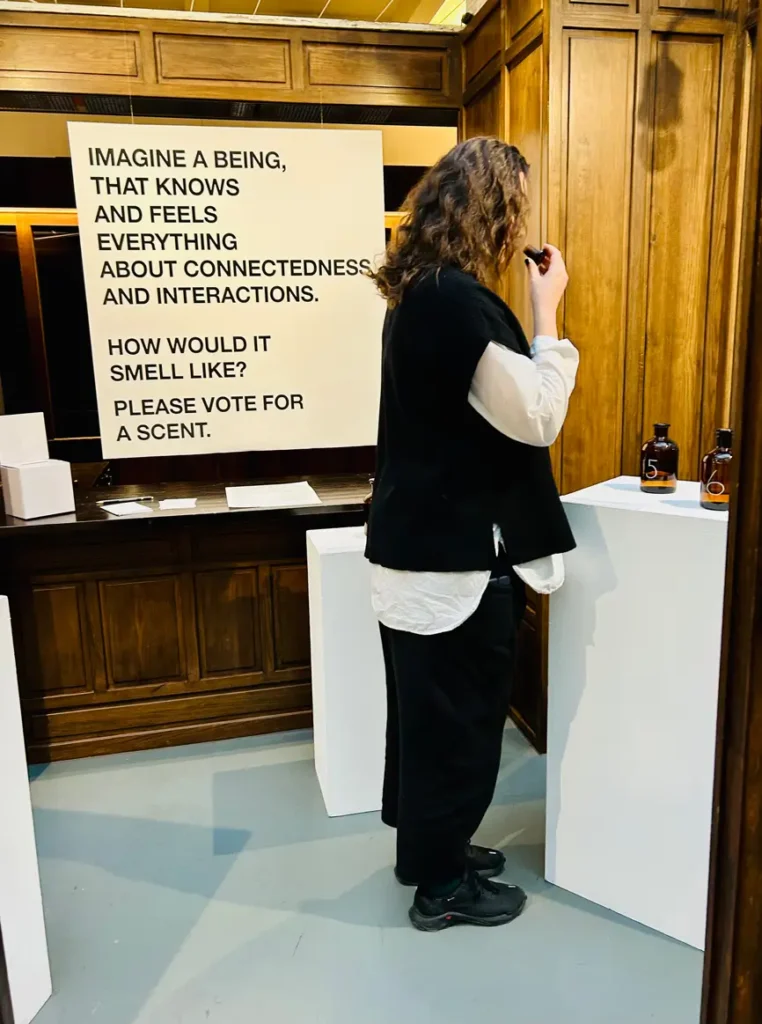
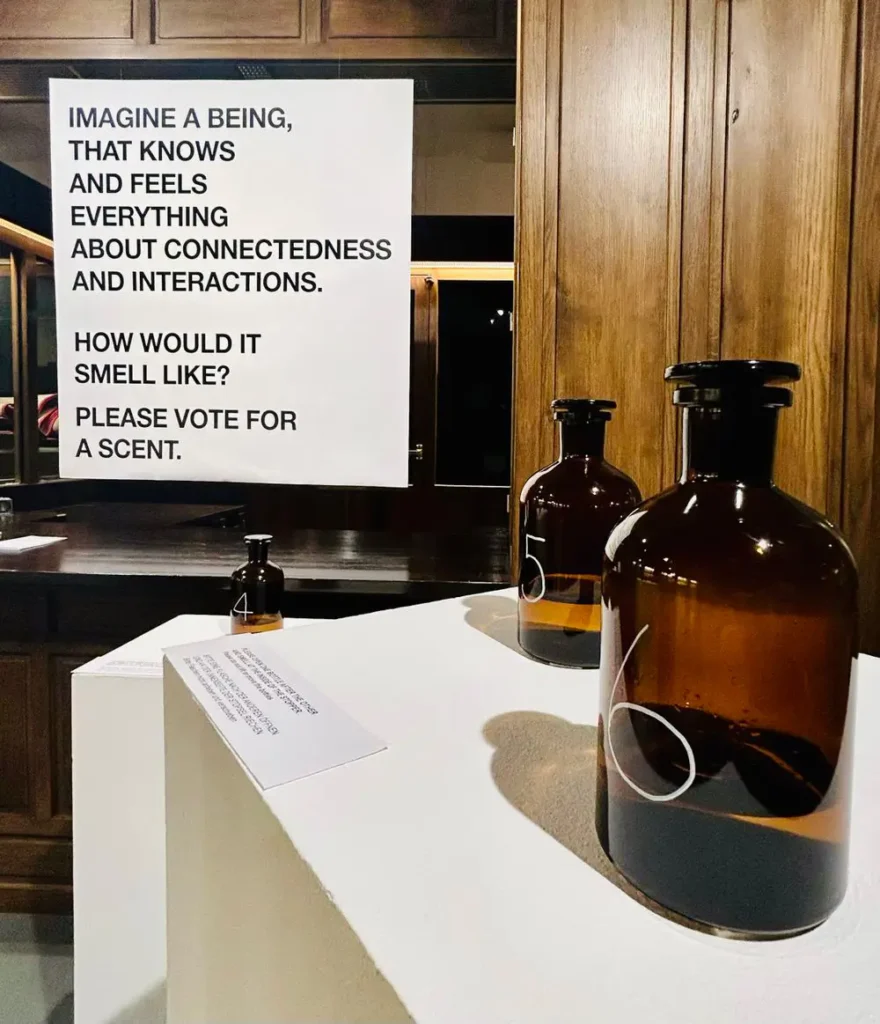
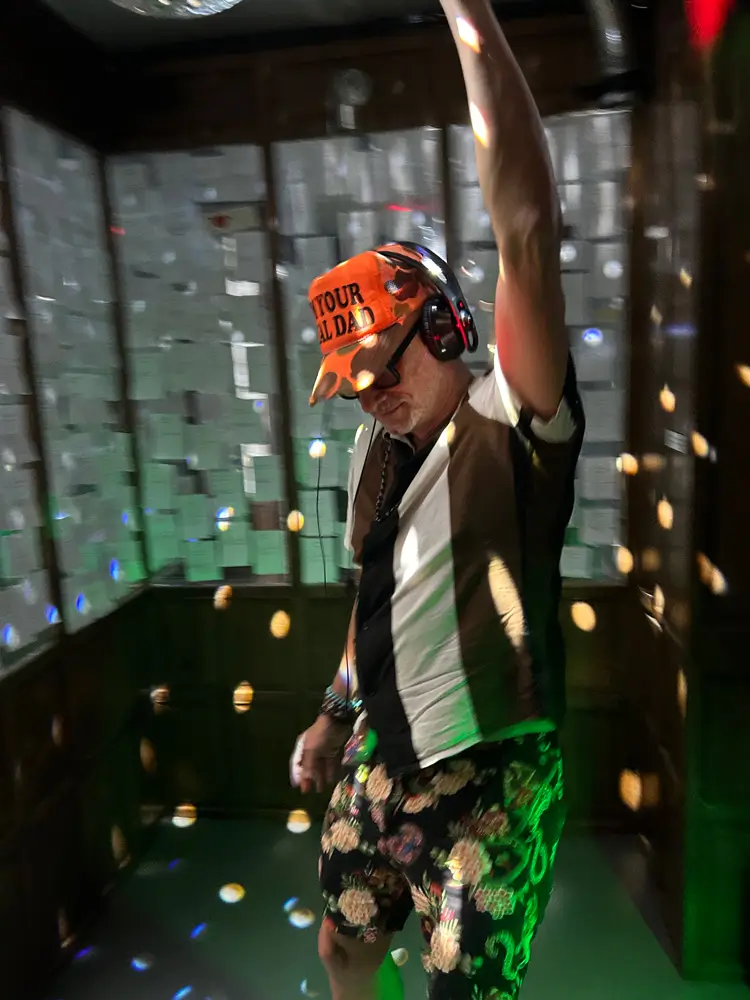
SΫS DANCE, the sixth part (June–October 2025), presents the voting results and extends the olfactory explorations of Part V by combining sound, smell, and movement into a performative environment. Visitors are invited to listen, dance, move, and develop systems awareness within an immersive sound and scent installation. Integrating performative movement and shared bodily experience, this part completes the trajectory from observational participation in Part I to full embodied experience. Sound, smell, and individual choreography merge into an atmosphere where systems awareness can arise.
The installation introduces the favourite scent of the international electorate. Informed by advances in generative AI, the SLS sound collective The Living Systems explores the dynamic interplay between human and machine, interrogating (co-)agency and expanding arts-based research. The lyrics of four tracks are based on poetic interpretations of systems theory and quotes from the Systems Awareness Conference at MIT (2025). Presented as house and electroclash artefacts in a staged mini club, they explore spaces of (co-)existence and emerging SΫS beings. SΫS Dance invites you to immerse yourself in scent and sound, in a human and more-than-human world – for a dance and embodied experience that celebrates connectedness and empathy.
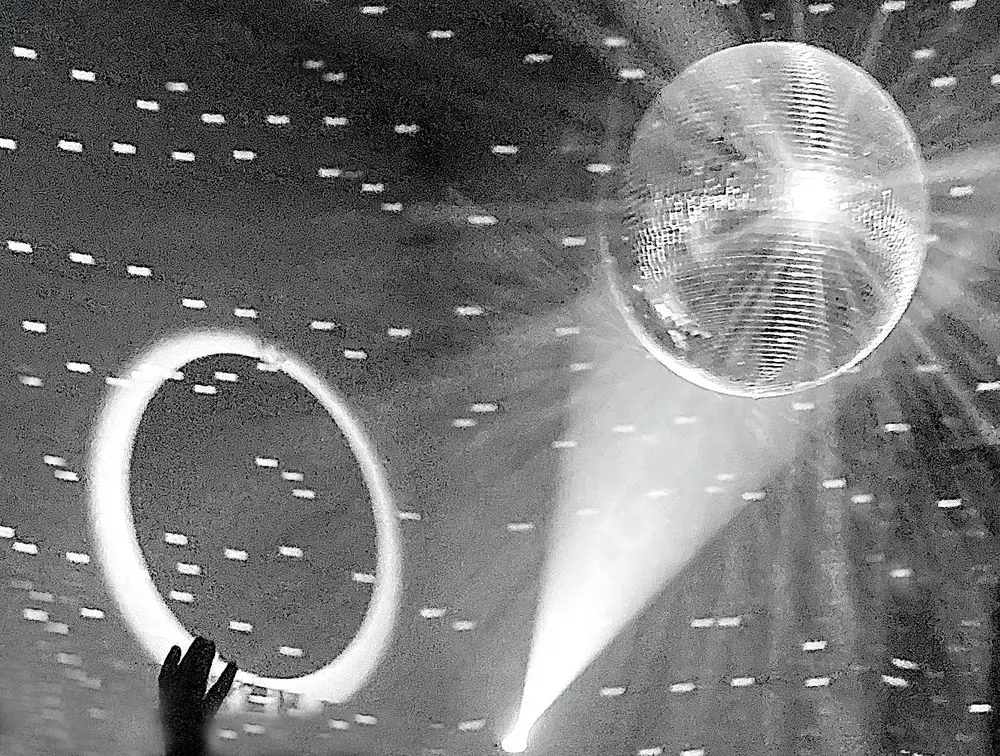
Taken together, the six parts of the Series of Scenographic Studies articulate a developmental trajectory. The early studies rely on natural materials, tangible boundaries, and relatively modest forms of participation, while later phases increasingly integrate sound, scent, and movement. Over time, visitors shift from observers and manipulators of objects to co-creators and dancers. Sensory modalities also expand and layer progressively: from touch, sight, and smell in the beginning, to complex combinations of olfaction, sound, touch and movement toward the end. Spatial and material strategies likewise evolve, moving from mutable earth-and-object installations to immersive shelters, multisensory environments, and performative spaces.
Overall, the scenographic studies show that living systems cannot be understood through theoretical abstraction alone. Instead, systems awareness emerges through embodied, multisensory, and participatory encounters that blur the distinction between spectators and other living systems themselves. By layering sensory modalities, expanding participation, and reconfiguring spatial and material environments, the series demonstrates how scenographic research can make systemic interconnections experientially tangible.
The implementation of ambient music
Ambient music has been integrated into SLS in both, multisensory scenographies (interactive, participatory installations) and performances as a method, creating ambient environments that dynamically address audiences in subtle ways, using music as an agent for enhancing embodied knowledge. Implemented soundscapes make complex information more engaging and accessible. Immersive installations and performances reveal the beauty and complexity of ecosystems, promoting appreciation for interconnectedness and systems awareness. Using high-end speakers and low-tech manual techniques (such as placing sound cubes in long cardboard rolls for distant listening) brings the soundscape to life within the multisensory scenography.
The implementation of ambient music based on and composed of field recordings in the SLS artistic research at AIL so far comprises:
Nature After Nature: Drawing Trees With Scent, an olfactory performance, including a specially composed – film score-like – soundtrack based on field recordings (“sensing woods”, Austrian and Swiss Alps) by b.fleischmann – performed by Mueller-Divjak in collaboration with fellow artist Lucie Strecker at the occasion of the Lange Nacht der Forschung (Long Night of Research), May 24th 2024.
Am I a System? Where are my Boundaries?, soundscape compiled of falling rain (from a distance: surround effect, dripping on leaves, merging with the sound of sunflower seeds falling on wooden floors).
Expanding System Boundaries, featuring the soundscape What if it was all a dream? by Thai artist Tuntun Taratawan Krue-On, based on field recordings recorded at a far-off country-side garden in Nakhon Ratchasima Province, Thailand (wind, insects, water, footsteps on soil), and in London (subway and traffic noise).
Hallabudda Reenactment, presenting a soundscape based on voice recordings of artists and scientists involved in the research (recorded at the occasion of the SLS-Symposium, AIL, December 2023): talking, mumbling, various ambient compositions (drones, glitches).
Sensing Theory – Shredding Cognitive Overload, soundscape compiled of rustling paper and noise of a shredder merging with dictations by Maria and Ludwig von Bertalanffy (based on recordings from 1970, audio data deriving from the archives of BCSSS – Bertalanffy Center for the Studies of Systems Sciences, acting as a national project partner for SLS.
Conception of SΫS: The Smell Of A Mythological Being, a participative scent installation staged as a voting booth, embedding a subtle soundscape composed of a sonic collage of various people slightly and more heavily breathing.
SΫS Dance, a sound installation, staging a small dance floor, comprising of several ambient tracks based on the project’s findings so far (spoken word, fragments of sound), leading the ambient approach (tapestry of sound) into a new direction of presentation – towards danceable house music edits (such addressing club culture as possible means of dissemination).
Multisensory Imagination Method (MIM)
MIM was developed for sustainable applicability and repeatability of performances and scenographic studies. It requires neither large structures nor many performers. The stimulated human capacity for multisensory imagination replaces the (re-)construction of scenographic settings and the use of extensive materials and spaces. Its components are sound, voice, smell, light/non-light, ambient temperature, air movement, a few haptic props, and comfortable seating or lying options for the audience.
The development of MIM is situated within a growing body of research on sensory studies, scenography, and ecological performance. Early work in sensory anthropology, such as Howes’ The Varieties of Sensory Experience (1991) and Classen’s The Deepest Sense (2012), established how sensory modalities are culturally shaped and epistemically significant. These insights underpin MIM’s multisensory approach, in which sound, smell, touch, and light/non-light act not merely as aesthetic effects but as epistemic triggers for ecological awareness.
Within theatre and performance research, Kershaw’s Theatre Ecology (2007) and Arons’ and May’s Readings in Performance and Ecology (2012) link performance practices to ecological systems. They foreground the entanglement of audiences, performers, and environments – an orientation central to MIM’s ambition of fostering systems awareness through guided multisensory imagined encounters. Josephine Machon’s account of immersive theatre (2013) supports this by articulating how intimacy and immediacy arise through sensory engagement, a principle MIM extends by emphasizing olfactory, tactile, and auditory modalities.
In relation to scenographic discourse, MIM positions itself most clearly. McKinney and Butterworth’s Cambridge Introduction to Scenography (2009) outlines conventions of spatial, material, and sensory composition. Against this backdrop, Tanja Beer’s Ecoscenography (2021) offers a vital framework: ecological design must minimize material consumption, emphasize sustainability, and reimagine scenography as relational practice. MIM resonates with Beer’s principles by reducing material load and replacing large-scale infrastructures with guided imagination. Instead of constructing physical environments, MIM creates “lightweight” yet affectively potent multisensory situations that are ecologically considerate and repeatable in diverse contexts.
Thus, MIM embodies eco-scenographic thinking. By placing imagination at the forefront as a renewable resource, it demonstrates how ecological scenography can be decoupled from material dependence without losing aesthetic, epistemic, or affective richness.
Nature After Nature – Multisensory medley for systems awareness
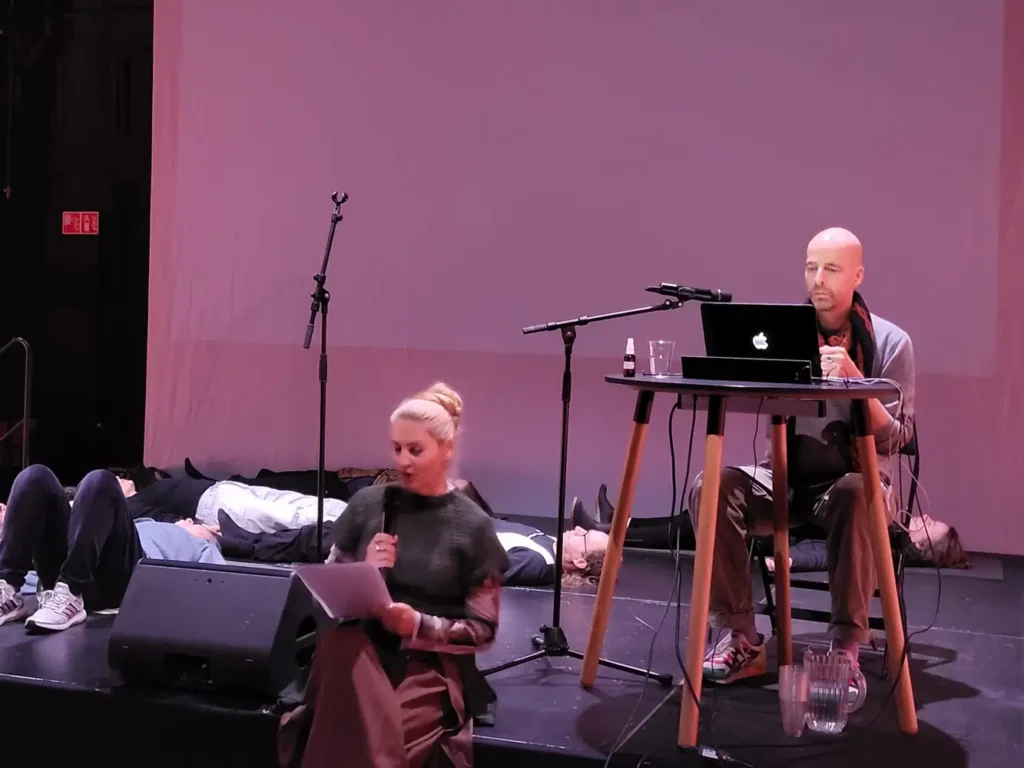
At CARPA Conference we delivered a multisensory lecture performance based on MIM. Entitled Nature After Nature – Multisensory Medley For Systems Awareness it consisted of three parts. The first part lasted about five minutes, the second about ten minutes, and the third part already led to several insights and to the methodology of the artistic research project Sensing Living Systems, reflections and discussions.
Part 1
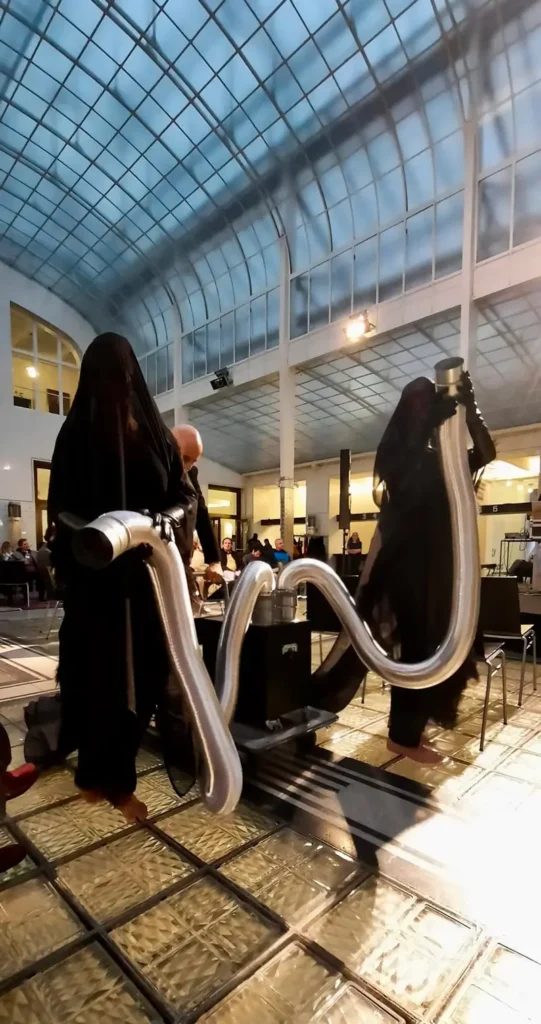
consisted of multisensory meditation alongside the performance Drawing Trees With Scent. Preparations for the future: Forest bathing without trees – A performative funeral procession for collective olfactory memories. The performance itself – and thus also the multisensory presentation of the performance – aimed to awaken empathy for nature and awareness of the consequences of human greed and stupidity, which might understandably lead to feelings of solastalgia (ecological grief). An original score and the scent of the performance (composed by Mueller-Divjak, capturing the scents of endangered tree species) accompany the meditation. Treasures found in forests, such as pine cones, lichen, moss, branches, etc., were placed in the hands of the participants. We started the lecture performance with the request / instruction: Please close your eyes, open your hands, I will place a small item into your palms. Please sense it carefully, perceive shapes, structures, textures, temperatures, moisture levels, sizes, degrees of hardness and softness. It is not necessary to guess what it is. Simply feel and touch. Then we began to recite the following text to the audience:
IMAGINE a man-made landscape.
Straight lines, no organic forms.
A lot of artificial stones,
a lot of glass and aluminum.
Beautiful and impressive –
but slick, cold in a way.
Light, green light
shines through the transparent floor.
You recognize two shapes, like shadows.
Two dark forms, human-like figures
are walking uncertainly and cautiously on glass.
Their bodies and faces
are hidden behind black veils.
Step by step,
they come closer.
They carefully feel the ground
with their bare feet,
walking gradually,
with honour and grief.
The two widows of the woods.
They draw trees, they draw trees
into the air.
They trace the shape of foliage trees, conifers,
fir and larch trees, pines,
the silhouette of a forest,
into the empty space.
They do not use a brush, a pen,
they use scent.
Delicate scents of tree species
threatened with extinction
due to commercial overharvesting,
uncontrolled deforestation,
excessive habitat destruction
and man-made changes
in climatic conditions
fill the air.
The widows of the woods move very slowly.
They exude the scent of precious experiences,
the smell of collective olfactory memories.
They remind us
of the present,
they prepare us
for a possible future:
forest bathing
without trees.
Part 2
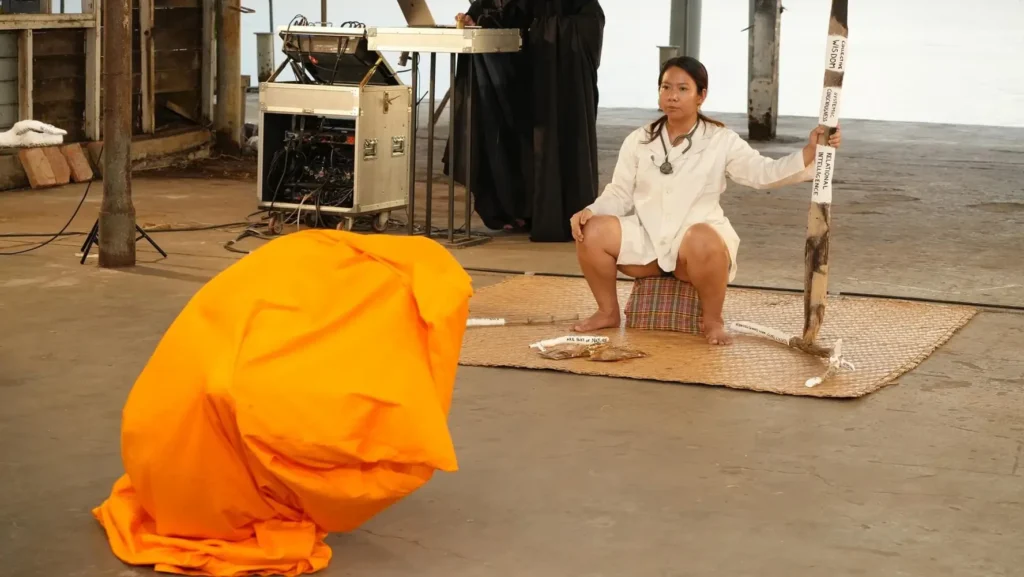
We then continued with the meditative retelling of the performance Touching Realities – Sensing the Invisible, which was developed by the interdisciplinary (multidisciplinary artists together with systems scientists) and intercultural (performance and sound artists from Myanmar, Thailand, Germany, Turkey and Austria) SLS-Team. It took place at Art Center Songkhla and was also staged at the Austrian Embassy in Bangkok in 2024. The performance stages multisensory encounters between a human figure, an unpredictable orange creature that symbolizes living systems, and other emblematic characters, illustrating the challenges of understanding and interacting with living systems. The narrative highlights the limitations of control-oriented, reductionist perspectives and instead emphasizes the transformative potential of awareness and embodied, sensory engagement. Interpreted from the perspective of general systems theory, the evolving relationship between the characters illustrates principles of openness, nonlinearity, feedback, and emergence. The allegorical performance thus functions as both a poetic and scenographic exploration of systems awareness, demonstrating how multisensory performances can foster more holistic, “more-than-human” understanding.
The soundscapes of the original performance accompanied the meditation, and we asked the audience: Please close your eyes again and touch your left hand with your right hand. Explore your fingers, the lines on your palms. Now touch and explore your right hand with your left hand in the same way.
The text of the retelling is not reproduced here, as it would exceed the scope of this paper.
Part 3
The third part saw an outline of the methodology of the artistic research project Sensing Living Systems and then referred to the scenographic study Conception of SΫS: The Smell of a Mythological Being as outlined in this paper and included an intensive olfactory experience in which the six scents from the scenographic study and the voting process were made explorable by collective smelling. The six scents from the scenographic study, created exclusively by Mueller-Divjak, namely Paul Divjak, and a young fragrance artist from Ghana based in New York, Sanaa Al-Sagnia Amar, could be explored by the participants allowing for intensive olfactory experiences and shared imagination and reflection, such opening-up of a lively field of discussion.
References
Abram, David. 1996. The Spell of the Sensuous: Perception and Language in a More-Than-Human World. New York: Pantheon Books.
Arons, Wendy, and Theresa J. May, eds. 2012. Readings in Performance and Ecology. New York: Palgrave Macmillan.
Beer, Tanja. 2021. Ecoscenography: An Introduction to Ecological Design for Performance. Cham: Palgrave Macmillan.
Braidotti, Rosi. 2013. The Posthuman. Cambridge: Polity Press.
Classen, Constance. 2012. The Deepest Sense: A Cultural History of Touch. Urbana: University of Illinois Press.
Ferrando, Francesca. 2019. Philosophical Posthumanism. London: Bloomsbury Academic.
Haraway, Donna J. 2016. Staying with the Trouble: Making Kin in the Chthulucene. Durham, NC: Duke University Press.
Howes, David, ed. 1991. The Varieties of Sensory Experience: A Sourcebook in the Anthropology of the Senses. Toronto: University of Toronto Press.
Kershaw, Baz. 2007. Theatre Ecology: Environments and Performance Events. Cambridge: Cambridge University Press.
Machon, Josephine. 2013. Immersive Theatres: Intimacy and Immediacy in Contemporary Performance. Basingstoke: Palgrave Macmillan.
McKinney, Joslin, and Philip Butterworth. 2009. The Cambridge Introduction to Scenography. Cambridge: Cambridge University Press.
Meadows, Donella H. 2008. Thinking in Systems: A Primer. White River Junction, Sterling, VA: Chelsea Green Publishing.
Senge, Peter M. 1990. The Fifth Discipline: The Art and Practice of the Learning Organization. New York: Doubleday/Currency.
Sivaraksa, Sulak. 2011. The Wisdom of Sustainability: Buddhist Economics for the 21st Century. London: Souvenir Press.
von Bertalanffy, Ludwig. 1968. General System Theory: Foundations, Development, Applications. New York: George Braziller.
Contributors
Jeanette Mueller
Jeanette Mueller studied Political Science, Jewish Studies and Arabic Studies (University of Vienna) and at the University of Applied Arts (Design Theory), as well as at the Academy of Fine Arts Vienna (New Media) and wrote her thesis about “Trust and Creativity”. Recipient of Theodor Körner Prize for Science and Art. Numerous installations, performances and artistic science communication projects across Asia and Europe. Her practice demonstrates long-term engagement with environmental themes and public interaction.
Paul Divjak
Paul Divjak, MAS studied at the Zurich University of the Arts (ZHdK, Department Design & Technology: “Advanced Studies in Scenography”) and is holding a PhD from the University of Vienna (Theatre, Film and Media Studies). His dissertation on “Integrative Staging: Scenographies of Participative Spaces” was granted a FWF-publication support. Divjak’s transdisciplinary work, which includes writing, electronic music, olfactory art, is exploring culture and the phenomenology of the senses. Recipient of Theodor Körner Prize for Science and Art.