This paper discusses locally sourced scenographic materials through two case studies in Japan. The first focuses on the Japanese traditional craft of washi paper, while the second examines wood sourcing in collaboration with a local forestry company. It also considers how sensory experience can influence the recognition of material agency. The paper explores the potential of rethinking material sourcing in ways that could enhance the creative process of performance-making.
Introduction
As societies face the increasingly severe impacts of abnormal weather and other consequences of climate change, every sector is being called upon to reconsider its practices, values, and responsibilities. As a part of society, the performing arts are no exception to these challenges. In The Aesthetic Dimension, Herbert Marcuse observed that “Art cannot change the world, but it can contribute to changing the consciousness… of the men and women who could change the world.” (Marcuse 1978, 33) To harness the power of art in guiding the direction of the future and contributing to social transformation, it is not sufficient merely to create works that address the theme of the climate crisis. The performing arts sector must also re-examine its linear economy, particularly in relation to materials, and transition toward a structure in which resources, people, and capital can circulate more dynamically.
In this research, the focus is on the relationship with materials; how they are extracted and how they eventually return to the earth. This concept should inform and shape the entire design process. The aim of this research is to translate this idea into practical applications within the industry.
This research centres on two key questions:
- What are the unexplored possibilities of existing materials in scenographic practice, and how can their innovative use enhance material circularity in theatre?
- How might innovative uses of existing materials transform current scenographic concepts and aesthetics?
To explore these questions, this research adopts a mixed methodology that combines theoretical analysis and practice-as-research. It begins by analysing the work of other practitioners to gather insights, and then moves into my own experimental practice as a scenographer, testing new approaches in real production contexts.
The central concept guiding my research is Ecoscenography, as developed by Tanja Beer. It involves rethinking scenography not as something confined to the stage, but as something that extends into everyday life and the environment, fostering responsibility and interdependence through imagination (Beer 2021). In this context, revisiting traditional Asian philosophies concerning the relationship between humans and nature – such as animistic worldviews and Jinen in Buddhism, offers valuable insights. Jinen refers to a state of existing as it is, encompassing all forms of existence: human, natural, organic, and non-organic. Buddhism teaches that embracing the state of Jinen is essential to living in harmony with the world. Although these ideas have faded in many contemporary Asian societies that have experienced rapid economic growth, they remain embedded in cultural practices. In short, the theoretical framework integrates Asian ecological perspectives and Ecoscenography, bridging philosophical insight with practical scenographic strategies.
This research comprises two case studies. The first is a theoretical analysis of a theatre company that uses washi, traditional Japanese paper, as a primary scenographic material. The second is a practice-based project involving the design of a modular wooden tent for a theatre company, developed in collaboration with a local forestry company. In both cases, plants and plant-based materials play a central role, reflecting my focus on sustainable design and material circularity.
Case study 1: Washi+ – tradition, materials, and sustainable scenography
The first case study focuses on the theatre company Washi+, to convey the cultural and intangible values of washi craftsmanship through theatre. The founder of Washi+, Ayumi Hamada, comes from a family that has produced Tosa washi in Kochi prefecture for over 200 years. Renowned for its strength and thinness, Tosa washi is used worldwide in art, architecture, and restoration. Today, the industry faces challenges such as material shortages, an aging workforce, and declining demands (Katayama 2018). Hamada returned to support her family’s business and founded Washi+ to highlight washi’s cultural value through performances and workshops.
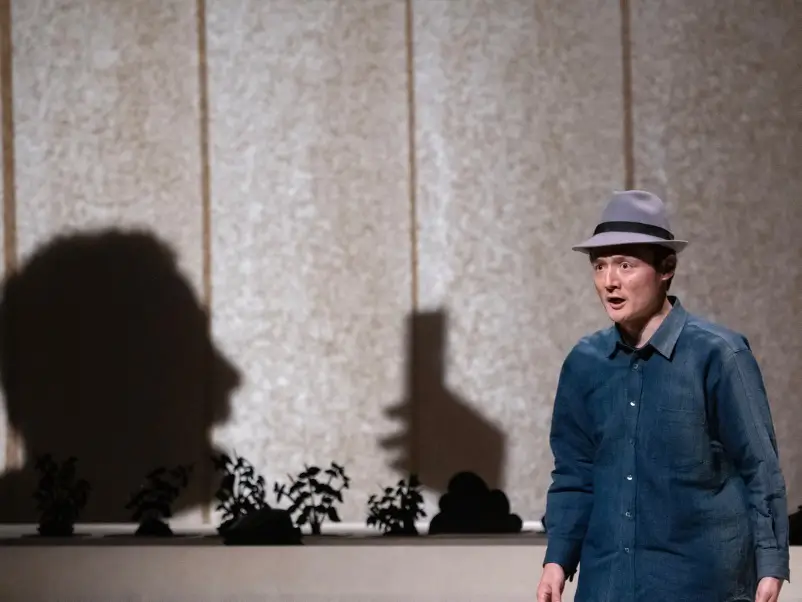
Here, the study examines the use of washi in their 2024 production Paper, created by Singaporean playwright and director Chong Tze Chien in collaboration with Washi+ (Chong 2024). While a more detailed discussion of the narrative structure and the cultural and sensory dimensions of the work can be found in Oshima (forthcoming 2026), this analysis focuses specifically on material circulation and temporality within scenographic practice.
Material circulation
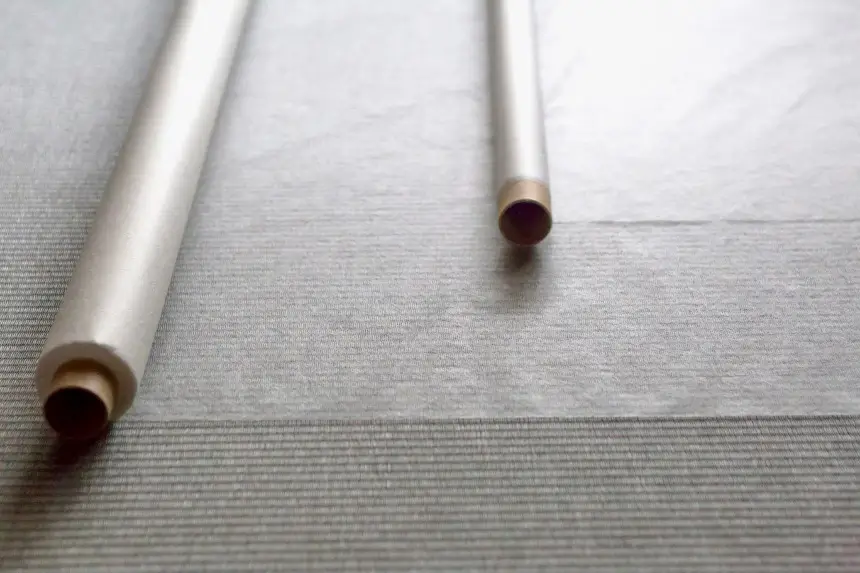
All the washi used on stage is crafted by Kashiki Paper, a business led by Hamada family. It is made entirely from plant-based fibers, natural mucilage, and water, making it fully recyclable and recrafted in new washi. Furthermore, all raw materials for the washi are sourced from local fields. Kashiki Paper maintains traditional methods by growing their own plants, even after the last local farmer retired. To support this labor-intensive process, Hamada converted a detached house into an artist-in-residence space, where artists assist with cultivation and material production while researching or creating their own work. Over twenty domestic and international artists have participated so far, contributing to both washi craft and community engagement (Washi+ n.d.). This approach not only secures raw materials but also promotes the cultural value of the Tosa region and its traditional crafts through actual experiences. Most of artists inspired by local nature and their craftmanship and some used washi in their art pieces. In this artist in residency, contemporary art and traditional craft exist in a mutually supportive and interdependent relationship.
Material temporality
Washi has been made in Japan for over a thousand years, and works produced using traditional methods have survived with minimal deterioration, showing exceptional durability. Ultra-thin washi made by Kashiki Paper is especially valued in the restoration of artworks. Their philosophy is rooted in preserving their family tradition, producing high-quality washi, and embracing a sense of responsibility that extends to future generations. This philosophy contrasts with modern consumer economies, which prioritize short-term profits through planned obsolescence over, long-term sustainability. It embodies two opposing value systems: one oriented toward continuity, stewardship, and material regeneration, and the other toward disposability and accelerated profit cycles.
In Paper, these issues are dramatised through intergenerational tensions. Older crafters aim to preserve labor-intensive family traditional methods, while the younger generation suggest to shift machine production system for economic survival (Chong 2024). Washi crafters are still searching for ways to achieve true sustainability, and the activities of Washi+ are part of their tactics to explore how traditional cultures evolve in contemporary society.
Findings
Washi+ combines the cultural and aesthetic value of washi with its material potential, creating a scenographic practice that contributes to the local material cycle through dramaturgy and creative solutions like artist residencies. Three key points stand out:
- Material circulation within a local system embedded environmental and traditional culture.
- Over generational product responsibility in traditional craft.
- The integration of real-world traditional craft practices into Ecodramaturgy, and the principles of Ecoscenography is realized both aesthetically and practically.
Rather than simply using reused or recycled materials on stage, Washi+ demonstrates that a holistic and creative model of sustainability in scenographic design can be achieved in a single production.
This case study raises a broader question for future projects: how might commonly used scenographic materials be reimagined to support responsible practices and foster new aesthetics within Ecoscenography? This question is further explored in an ongoing practice-based project that involves designing and constructing a modular wooden tent.
Case study 2: Wooden tent creation
The project is a cross-disciplinary collaboration between Gekidan Norabou (an independent theatre group), Yanagisawa Ringyo (a local forestry company), and myself as scenographer and researcher. Both collaborators are based in Matsumoto, a region, rich in forest resources.
Gekidan Norabou: Founded in 2018, Norabou produces site-specific performances in natural and everyday settings, often incorporating various forms of puppetry. Since 2023, the group has adopted what they call a “Zero Carbon Theatre” approach for their tent productions, generating all electricity for performances through solar power (Gekidan Norabou n.d.).
Another collaborator, Yanagisawa Ringyo, aims to redefine forestry as an integrated practice that extends beyond logging and timber production, cultivating sustainable relationships between people and local ecosystems. Their activities include forest management, timber distribution, urban greening, farming, environmental education, and the development of campgrounds in local forests (Yanagisawa Ringyo n.d.).
Project process
The project is structured around five stages:
- Preparation, which involves sharing ideas and philosophies among collaborators;
- Procurement, focused on sourcing wood from a local forest;
- Design, dedicated to developing the tent structure;
- Production, which entails crafting the individual components; and
- Presentation, encompassing the exhibition of the completed project and documentation of the process.
The procurement phase is particularly distinctive, as it involves collaboration with a local forestry company to obtain materials directly from the surrounding environment. Sourcing locally enables an exploration of how the inherent qualities of the materials influence both the design concept and the creative process. At present, the project is in the procurement stage and has recently begun the design phase, which forms the primary focus of this paper.
Preparation and field visit
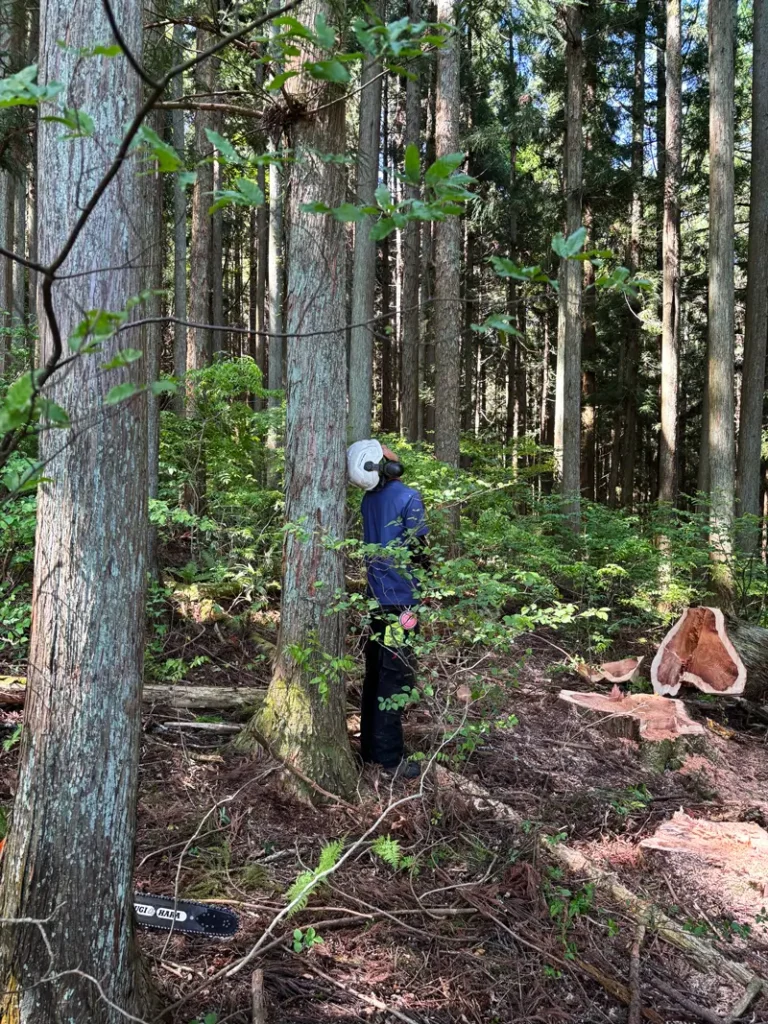
The first stage of the project involved visiting a forest managed by Yanagisawa Ringyo to understand their working methods within the woodland environment. When we met two woodcutters, they were selecting trees to be cut down for thinning. They carefully observed the spacing and growth conditions of the trees before determining the safest direction for felling. Once a tree had been chosen, one aligned his body with it, raised his hands, and swung them to indicate the direction in which the tree would fall. To us, this ritual-like gesture appeared almost sacred, as if he were preparing for an ancient ceremony. After we offered a short prayer to the forest for safety, he proceeded to cut the tree using a chainsaw, wedges, and a hammer.
It was the first time I had witnessed a large tree falling, and the moment was profoundly striking. I touched the freshly cut surface, examined the tip of the trunk, and was astonished by the size and form of its uprooted roots. This experience offered a completely new perception of the tree as a living entity. Within a single tree, we discovered an astonishing diversity of colours, forms, and textures. It was only through this direct physical engagement, seeing, touching, listening, and even sensing the vibrations in the air that I developed a deep respect and awe for the tree, which had stood on the Earth far longer than I have. This encounter provided both conceptual and sensory insights that continue to inform my practice.
On the way back, we discussed shimatsu, a Japanese concept that emphasises the complete utilisation of resources and the avoidance of waste. Just as our ancestors once made use of every part of a whale, we proposed assigning a purpose to every material derived from a single tree and using it in its entirety. This approach opens up possibilities for creative forms that would be inconceivable when working solely with standardised materials. Building on this concept, we set out to design a wooden tent, exploring the creative potential embedded within the resources of a single tree while maximising both sustainability and artistic expression.
Designing the tent
By giving the tent multiple purposes, we aim to broaden its opportunities for use, ensuring that it remains more sustainable over time. We are planning to use the tent in two situations, (1) Outdoor theatre, accommodating both performers and audiences. (2) Indoor stages in schools or community spaces.
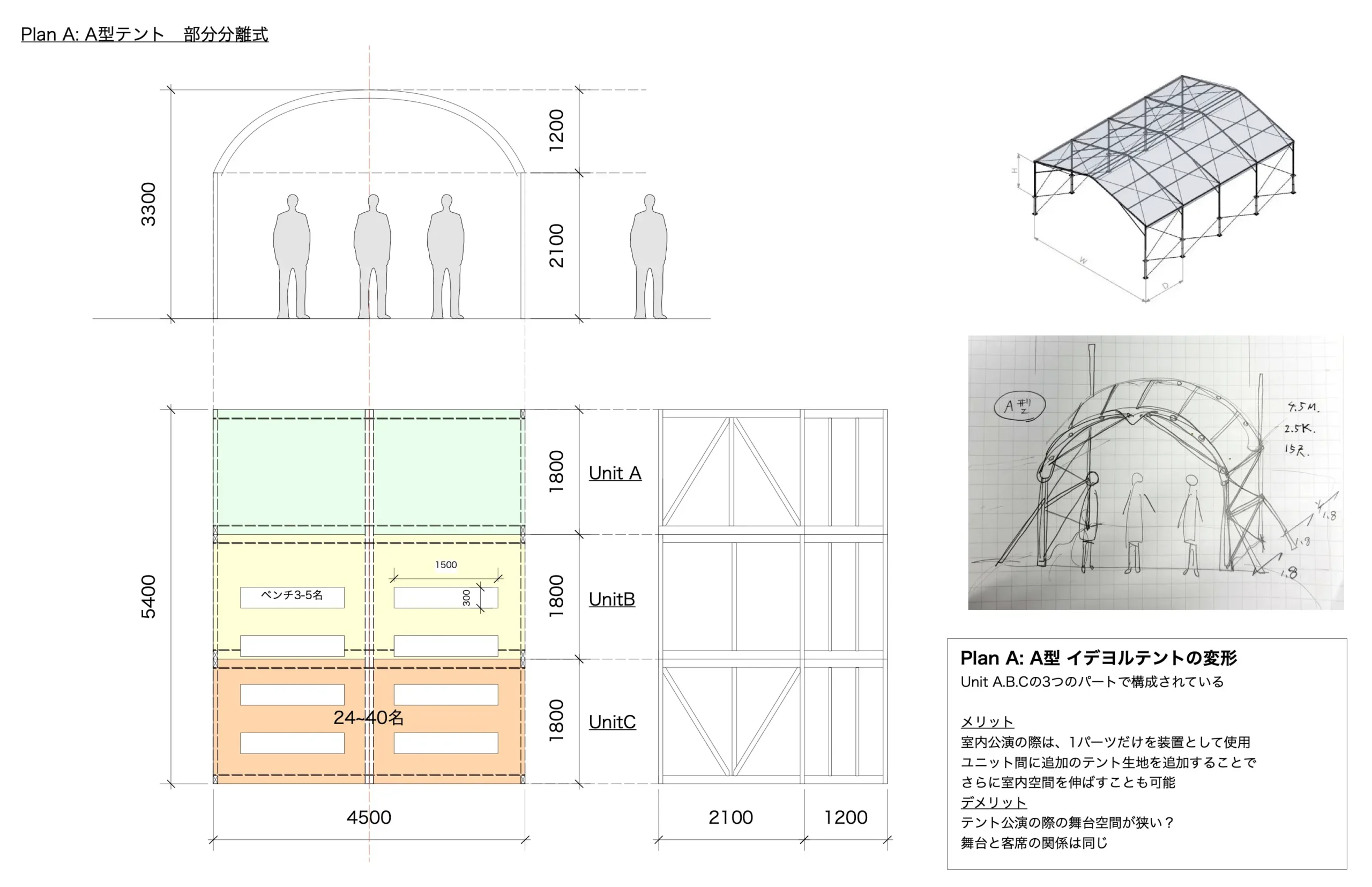
The structure uses interchangeable arched units (A, B, C), allowing it to be expanded by adding more space to create additional space for outdoor theatre when necessary, while also enabling flexible spatial layouts that can be adapted for different indoor productions. The allocation of each part of the tree is still in progress. We plan to use the trunk for the main framework, while leaves, barks, and roots are creatively repurposed using craft techniques such as dyeing, pressing, and producing pigments.
Norabo’s new production after this project, focused on local trees and forests, will be staged using this tent at local elementary schools, which exploring the integration of materials and scenography into both dramaturgy and environmental education.
Conclusion
These two case studies, Washi+ and the Wooden Tent, demonstrate that shifting material procurement from conventional market products, to local, sustainability-minded suppliers can not only create environmentally responsible scenography, but also open up new creative possibilities. Locally sourced materials carry inherent cultural and ecological value, providing opportunities to convey ancestral knowledge and practices through theatre. In this way, the process of procuring materials for scenography goes beyond merely securing supplies; it can become a creative practice in its own right, contributing to the rediscovery and dissemination of local culture, empowering communities, and supporting the development of a sustainable society.
References
Beer, T. 2021. Ecoscenography: An Introduction to Ecological Design for Performance. Singapore: Palgrave Macmillan.
Chong, T.C. 2024. Paper. Directed by T.C. Chong. [filmed performance] The Kochi Prefectural Museum of Art, 16 August 2024. Privately owned.
Gekidan Norabo. no date. About [online]. Available at: norabou.net/#about [Accessed 5 August 2025].
Katayama, Y. 2018. ‘Washi: understanding Japanese paper as a material of culture and conservation’. The Book and Paper Group Annual, 37, pp.77–91.
Marcuse, H. 1978. The aesthetic dimension: Toward a critique of Marxist aesthetics. Boston: Beacon Press.
Oshima, H. forthcoming 2026. ‘The Potential of Theatre to Communicate Intangible Cultural Values: Washi+ Holistic Integration of Nature, Community, and Traditional Craft’, in Denyer, H.J. (ed.) New Paths in Ecodramaturgies. Routledge Press.
Yanagisawa Ringyo. no date. Yanagisawa ringyo ni tsuite [online]. Available at: yanagisawa-ringyo.jp/vision#vision_vision [Accessed 6 August 2025].
Contributor
Hiroko Oshima
A scenographer and researcher based in Tokyo, she began her career as a set and costume designer after completing her Bachelor’s degree in London. She has worked on over 130 productions in various theatre genres. After completing her Master’s study on sustainability and theatre at Lancaster University in 2023, she established the non-profit company Image Nation Green to advocate for green transformation in the Japanese theatre sector. Now, she continues her research about sustainability in scenography at Lancaster University, funded by the UK Research Council.