This research paper responds to the lecture presentation: “MYCELIO: Entering Into a Sonic Intra-Active Quantum Relation with Plant Life” given by Dr. Juliana España Keller and live butoh performance by Dr. Laura Maillo Palmer, presented with a generative AI audio-visual projection titled: “MYCELIO”, as part of the Strand (2): Ecological Performance Making.
Author/Conference Presenter: Dr. Juliana España Keller, Concordia University, Montreal, Quebec, Canada. Butoh Dancer: Dr. Laura Maillo Palma, University of Malaga, Malaga, Andalucia, Spain.
Introduction
This paper explores the convergence of Butoh dance, vegetal and fungal matter, and generative AI audio-visual video projection/s as a speculative ecology of posthuman worlding. Butoh, with its slowness and corporeal surrender, becomes a medium for attuning to the resonant frequencies of plant life. These non-human beings, through low-frequency vibrations and electrochemical rhythms, parallel the dancer’s oscillations of decay, transformation, and regeneration. Mycelial webs mirror butoh’s dissolution of the self, opening choreographies of entanglement in which vegetal and fungal life are revealed as cosmogonic forces.
Generative AI extends this somatic encounter into a virtual 4K projection, unfolding “worlds within worlds” that speculate on ecological futures. The AI-generated narrative visualizes plants as sentient vegetal witnesses of climate collapse, able to register environmental thresholds beyond human sensing. The audio-visual artwork: “MYCELIO”[1] presents an apocalyptic horizon in which human survival falters, while vegetal and fungal beings regenerate and reclaim planetary life. By staging this speculative temporality, the work amplifies non-human agency while unsettling anthropocentric sovereignty.
This hybrid practice – somatic, sonic, vegetal, fungal, and machinic – constitutes a myco-vegetal ecology of performance. It proposes Butoh not as representation but as an embodied passage into vegetal temporality, fungal transmission, and machinic speculation. Drawing from ecofeminist materialism and posthuman theory, the paper situates entanglement as both aesthetic and ontological, asking how humans might choreograph with plants, fungi, and algorithms to reimagine survival beyond the human – into a shimmering, posthuman acoustics of decay, regeneration, and planetary storytelling.
Entering into a Sonic Intra-Active Quantum Relation with Plant Life.
In recent years, the entanglements of art, ecology, and technology have become urgent fields of inquiry. As climate collapse accelerates and anthropogenic pressures intensify, artists and scholars alike are rethinking the boundaries of the human, the agency of non-human beings, and the infrastructures of survival. The Anthropocene, as a contested descriptor of our geological epoch, foregrounds the destructive impact of human activity while also demanding new conceptual and aesthetic tools for imagining futures beyond human exceptionalism. Against this backdrop, artistic research practices have turned to plants, fungi, and other non-human beings as collaborators in reimagining life, communication, and resilience.
In an earlier journal paper by Juliana España Keller titled: Entering Into a Sonic Intra-Active Quantum Relation with Plant Life (España Keller 2024), España Keller explored how plant bioacoustics opens a relational field in which humans and plants intra-act through sonic vibrations. Plants emit acoustic signals in the low-frequency range of 50–120 Hz, a vibratory field that exceeds human auditory perception yet can be captured and amplified through technological mediation (Gagliano 2018). When these signals are translated into audible soundscapes, they allow for what España Keller describes as a sonic shimmering ecology: a relational encounter where vegetal matter is not passive but vibratory, communicative, and world-building. This framework drew upon American, Quantum Physicist, Karen Barad’s (2007) notion of intra-action to argue that sound does not merely travel between independent entities but actively constitutes relations, dissolving clear boundaries between human and plant, subject and object, matter and meaning.
On this premise, this paper extends into three new directions after delivering a lecture presentation and a live performative audio-visual work presented at the CARPA9 Conference on Artistic Research in Helsinki, Finland (2025).[2] Combining live butoh dance, audio-visual projection with generative AI, allows for a more comprehensive theorization of posthuman ecologies by situating plant acoustics within embodied, material, and virtual dimensions of worlding as vegetal witnessing. The urgency of this expansion stems from the temporal horizon we face: an impending climate catastrophe that threatens human survival while leaving open the possibility that plants and fungi will regenerate in our absence. By exploring artistic practices that converge with vegetal temporality, fungal relationality, and machinic speculation, España Keller proposes what she refers to as a somatic myco-vegetal ecology – a concept where sound, movement, and algorithmic projection entangle humans with non-humans in speculative rehearsals of survival and regeneration.
The first vector of expansion is Butoh dance, a postwar Japanese avant-garde practice known for its radical embrace of corporeal dissolution, opacity, and metamorphosis (Baird 2012; Fraleigh 2010). Butoh resists representation in favor of becoming – situating the dancer as a porous body open to environmental and non-human forces. Its slowness and emphasis on decay resonate with vegetal temporality, which unfolds across rhythms imperceptible to human chronologies. Moreover, Butoh’s corporeal vocabulary of surrender, grotesquerie, and liminality aligns with fungal processes of decomposition and regeneration. As Chinese American anthropologist, Anna Tsing (2015) propositions that fungi such as the “matsutake” thrive in precarious conditions, weaving multispecies assemblages in the ruins of capitalism (Tsing 2017). By linking butoh with mycelial networks, I argue that the dancer can embody a vegetal body – a somatic state that channels plant and fungal rhythms of becoming.
The second vector is generative AI, particularly in the form of 4K video projections. AI-generated imagery, when mobilized in performance contexts, creates speculative ecologies that exceed human imagination. These machinic projections unfold as “worlds within worlds,” recursive landscapes where vegetal sensing becomes both narrative and aesthetic device. In these projected futures, plants are imagined as sentient agents who sense climate collapse, registering shifts in temperature, toxicity, and soil degradation. The machinic imagination stages apocalyptic scenarios where human presence fades, while plants and fungi persist, regenerate, and continue world-building. This position resonates with American scholar, Timothy Morton’s (2013) concept of hyperobjects – entities like climate change that are distributed across vast scales of time and space – and with Australian scholar, Rosi Braidotti’s (2019) articulation of the posthuman condition, in which human exceptionalism gives way to entangled assemblages of organic and inorganic agents.
The third vector, fungal networks and the title of the artwork: “MYCELIO” – offers both material and metaphorical grounding for posthuman ecologies. Mycelium, the underground web of fungal filaments, is increasingly recognized not only as a biological infrastructure for nutrient exchange and communication but also as a conceptual model for relationality (Simard 2021). Its rhizomatic structure echoes philosophical accounts of non-hierarchical connectivity (Deleuze & Guattari 1987), while its role in decomposition underscores the generative potential of decay. In dialogue with butoh and AI, mycelial networks illuminate how survival may be conceived not as individual persistence but as relational regeneration in the ruins of the Anthropocene.
Plant bioacoustics and sonic intra-relations
Plants have long been understood in Western epistemologies as passive, inert entities, their “communication” largely relegated to chemical and physiological processes. Recent research in plant bioacoustics challenges these assumptions, revealing that plants actively emit vibrations and respond to sonic stimuli in ways that suggest complex intra- and interspecies signaling. Studies by Italian Australian Ecologist, Monica Gagliano (2018) demonstrate that plants emit acoustic signals in the 50–120 Hz range, frequencies that are typically inaudible to human ears but can be captured and translated through technological mediation. These signals are not random; they are correlated with environmental stressors, such as drought or predation, indicating a capacity for adaptive response. Such findings position plants as active participants in their environment, capable of producing and responding to vibratory information in a relational field.
The implications of plant bioacoustics extend beyond biology into philosophy and artistic practice. From an ecofeminist perspective, the recognition of plant agency resonates with American activist and environmental thinker, Stacey Alaimo’s (2010) concept of trans-corporeality, which emphasizes the entanglement of human and non-human bodies. Listening to plant vibrations is not merely an act of translation; it is an engagement with an ontological field in which agency, subjectivity, and matter are co-constituted. Barad’s (2007) framework of intra-action is particularly useful here – sound does not merely travel between discrete entities but enacts relations that bring both sender and receiver into being. Plants, human listeners, and technological interfaces intra-act to produce a shared acoustic environment, in which España Keller refers to as a sonic shimmering ecology that reveals entangled existence.
Indigenous epistemologies provide further grounding for understanding plants as communicative beings. Indigenous, American botanist, Robin Wall Kimmerer (2013) emphasizes that plants possess knowledge, memory, and agency within relational frameworks that predate Western scientific abstraction. In the Potawatomi and other Indigenous traditions, plants are recognized as teachers, collaborators, and moral agents. Engaging with plant sound, therefore, aligns with an ethic of attentiveness and reciprocity, rather than mastery.
In practical terms, translating plant vibrations into audible sound involves technological mediation, often with bio-sensing devices. These devices capture minute oscillations in stems, leaves, and roots, which are then processed in real time to produce sound patterns that can be composed, modulated, or spatialized within performance spaces. Such practices foreground the relationality of the sonic field: human performers, plants, and machines co-create a temporal and spatial experience that disrupts anthropocentric assumptions about perception, agency, and aesthetic experience.
The notion of sonic intra-relations extends beyond the technological capture of vibrations. It encompasses philosophical, ethical, and artistic dimensions, framing sound as a medium of relational ontology. Listening to plant vibrations compels humans to recalibrate their temporalities and sensorium. Unlike the rapid, discrete events typical of human auditory perception, plant vibrations unfold in slow, subtle patterns, reflecting the temporality of growth, decay, and regeneration. Attuning to these rhythms fosters an expanded phenomenology, in which humans experience themselves as embedded within vegetal processes rather than separate from them.
Moreover, plant bioacoustics intersects with contemporary concerns about climate change and ecological collapse. Plants are sensitive to environmental stressors, and their vibrations can reflect drought, temperature fluctuations, and soil degradation. By listening to these signals, humans may gain an embodied, affective understanding of environmental precarity. In this context, sonic intra-relations function as both artistic practice and ethical intervention: they cultivate attentiveness to the rhythms of non-human life and foster a form of multispecies care that acknowledges interdependence.
Integrating these insights into performance practice requires methodological and conceptual rigor. Artistic engagement with plant sound must balance technological sophistication with ethical sensitivity, avoiding anthropomorphism while fostering relational immersion. This balance is exemplified in collaborative projects that combine field recordings, live modulation, and interactive performance, creating immersive soundscapes in which plant vibrations, human movement, and technological mediation coalesce. These practices exemplify what España Keller terms a posthuman acoustic ethics: a mode of engagement that recognizes the agency of non-human life, situates humans within entangled ecological systems, and cultivates attentiveness, humility, and responsiveness.
Butoh and the vegetal body
Butoh, an avant-garde dance form emerging in postwar Japan, is characterized by corporeal transformation, opacity, and a radical engagement with impermanence and decay. Founded by Hijikata Tatsumi and further developed by Ohno Kazuo and later Waguri Yukio, Butoh arose in response to the trauma of war, industrialization, and the alienation of modernity. Its aesthetic is deliberately non-narrative, anti-representational, and often grotesque, emphasizing slowness, stillness, and the dissolution of the individual body into relational, environmental, and temporal processes. In this context, butoh serves as a somatic methodology for engaging with vegetal and fungal temporality, allowing the dancer to embody rhythms of growth, decay, and regeneration that are otherwise imperceptible to human perception.
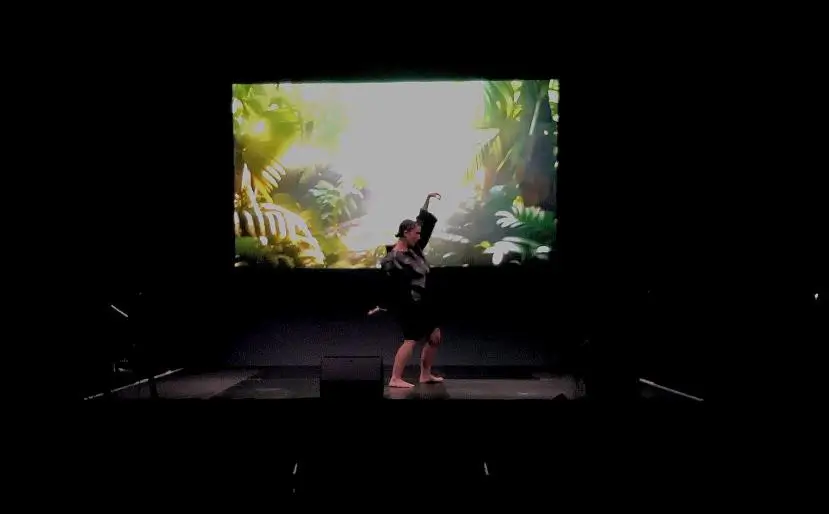
The concept of a vegetal body emerges from the convergence of butoh’s somatic practice with the temporalities of plants. Plants, in their slow and often imperceptible movements, operate on timescales that exceed human chronologies. Their growth, photosynthetic cycles, and reproductive processes unfold across hours, seasons, and decades, resisting immediate observation and anthropocentric measurement. By attuning to these rhythms, Butoh dancers can cultivate an embodied sensitivity to temporalities beyond the human. The slowness, weight, and subtle muscular adjustments inherent in butoh performance mirror the temporality of plant life, creating a somatic resonance that aligns the human body with vegetal processes. This alignment is not metaphorical alone; it is a process of intra-action, in which the dancer becomes a conduit through which non-human temporalities can be experienced and enacted.
Fungal networks, particularly mycelium, provide additional structural and conceptual grounding for the vegetal body. Mycelium, the subterranean filaments of fungi, form dense, rhizomatic networks that facilitate nutrient exchange, communication, and ecological regeneration (Simard 2021). These networks are neither hierarchical nor linear; they embody distributed agency and resilience. In the context of performance, mycelium serves as both metaphor and material partner. Just as mycelial threads connect disparate organisms and foster cooperative survival, butoh dancers interconnect with their environment and with each other, dissolving the boundaries of the autonomous self. This rhizomatic logic parallels Deleuze and Guattari’s (1987) conceptualization of the rhizome: an assemblage – in which multiplicity, connectivity, and non-linearity replace hierarchical structures. The vegetal body, informed by fungal networks, thus embodies relationality, collective agency, and ecological responsiveness.
Butoh’s attention to the grotesque, decay, and transformation resonates with ecofeminist and posthuman frameworks. For a Butoh dancer, by embracing corporeal dissolution, surrender, and liminality, become instruments through which vegetal and fungal agency can be enacted. The performance space becomes a relational ecology in which humans, plants, and fungi co-constitute temporalities, movements, and affective resonances.
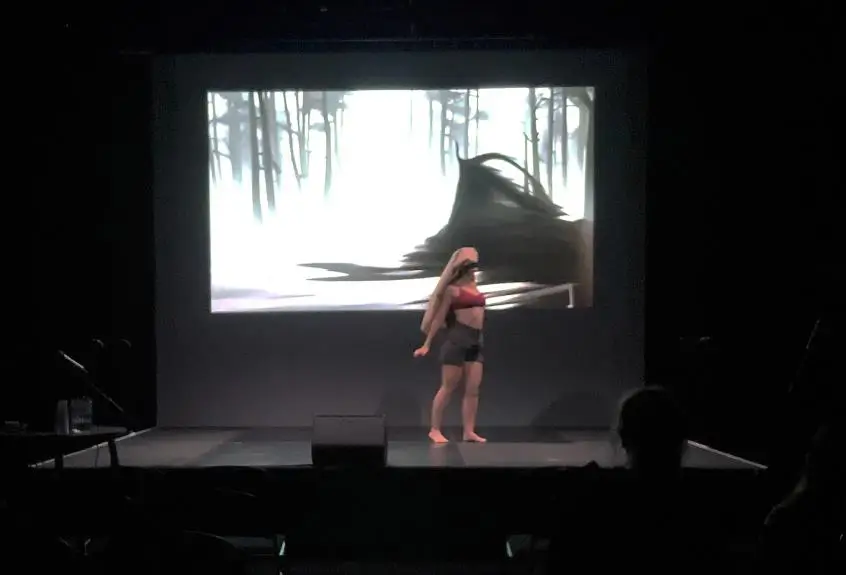
The embodied strategies of Butoh – slowness, suspension, undulation, and careful modulation of muscular tension – parallel the subtle oscillations of plant and fungal life. The dancer’s body, in becoming vegetal, is neither entirely human nor wholly non-human. Rather, it exists in a liminal zone of entanglement, mediating between human perception and non-human temporalities. This liminality allows for speculative experimentation, in which the boundaries between observer and observed, actor and environment, self and other, are destabilized. The vegetal body is thus an ethical and aesthetic construct: it facilitates attentive engagement with non-human life while modeling posthuman relationality.
Performance-based explorations of vegetal temporality extend beyond metaphor into the realm of experimental methodology. For example, a Butoh dancer, plants and fungi act as co-choreographers, their rhythms shaping the movement of the human body. The process is iterative and experimental: a butoh dancer responds to environmental and sonic cues, allowing the performance to emerge from the intra-action of bodies, materials, and technologies. This approach embodies a relational ontology, echoing Barad’s (2007) insistence that phenomena emerge through entangled intra-actions rather than pre-existing entities.
The concept of somatic myco-vegetal ecology can thus be situated as a butoh dancer becomes a living node within this ecology, translating invisible or imperceptible rhythms into perceptible form. This process offers new ways of understanding survival, regeneration, and co-constitution in posthuman ecologies. It also intersects with Indigenous epistemologies, which recognize plants and fungi as knowledgeable and sentient beings. Wall Kimmerer (2013) emphasizes reciprocity and attentiveness in human-plant relations, an ethic mirrored in the performative engagement of the vegetal body.
Butoh’s aesthetic of transformation also allows for speculative engagement with futures of ecological collapse and regeneration. In contexts where climate collapse threatens human survival, the vegetal body becomes a tool for imagining multispecies persistence. The dancer’s embodied practice can model how plant and fungal temporality might continue, regenerate, and restructure ecologies in human absence. This speculative dimension is enhanced when integrated with generative AI projections, which extend the temporal and spatial horizons of performance into virtual, apocalyptic landscapes. Together, butoh and AI offer complementary modalities: one somatic, tactile, and relational; the other algorithmic, visual, and speculative.
Finally, the vegetal body is therefore not only an aesthetic or methodological innovation but also a philosophical intervention, challenging entrenched hierarchies between human and non-human life while expanding the possibilities of artistic, scientific, and ecological inquiry.
Generative AI and worlds within worlds
Generative Artificial Intelligence (AI) has rapidly emerged as a tool capable of producing complex visual, auditory, and narrative systems that exceed human imagination. In the context of performance and ecological inquiry, generative AI can create immersive, algorithmically generated environments that visualize speculative ecologies, including the temporalities and agencies of non-human beings. These virtual landscapes function as what España Keller terms: “worlds within worlds” – recursive, layered realities that allow human participants to perceive, imagine, and engage with posthuman temporalities and multispecies relationalities.
In this research and in the presentation of the artwork: “MYCELIO”, generative AI acts as both medium and collaborator, producing visualizations that are informed by bioacoustic data, ecological simulations. For example, low-frequency vibrations captured from plants can inform AI-generated imagery, creating visual motifs that resonate with the vibratory patterns of leaves, roots, and stems. Similarly, mycelial network structures can guide the algorithmic arrangement of visual textures and flows, generating rhizomatic virtual ecologies that mirror subterranean fungal connectivity. These projections do not simply illustrate ecological phenomena; they enact them, materializing otherwise imperceptible networks, rhythms, and interdependencies.
Climate change, as a hyperobject, is experienced in fragmented, incomplete ways; generative AI projections provide a mediated platform to perceive its temporal and spatial scale. By visualizing the vibratory, adaptive, and regenerative capacities of plants and fungi, AI enables participants to perceive multispecies survival strategies in scenarios where humans are increasingly absent. The artwork: “MYCELIO” also challenges the linear temporality of human-centered narratives, offering recursive, nested representations of ecological systems in which past, present, and speculative futures co-exist.
Generative AI’s speculative potential extends to apocalyptic imaginaries, which are central to this research. Humans are neither the protagonists nor the arbiters of ecological continuity; instead, they become vegetal witnesses to a planetary process of persistence and renewal that unfolds beyond anthropocentric temporalities. By foregrounding vegetal agency and regenerative capacities, generative AI functions as a speculative laboratory for exploring posthuman futures, highlighting how life persists in complex, non-linear, and relational ways.
From a philosophical perspective, AI-generated environments align with Rosi Braidotti’s (2019) posthuman condition where human exceptionalism is decentered, and agency is distributed across multiple entities and processes. Generative AI further complements butoh and bioacoustics by extending the temporal and spatial scope of relational ecologies. While butoh embodies vegetal temporality in the human body and bioacoustic mediation makes plant vibrations perceptible, AI visualizations project these rhythms into vast, recursive landscapes. This multiscalar approach enables participants to perceive connections between micro-temporality (plant vibrations), meso-temporality (dancer movement and fungal growth), and macro-temporality (climate change and planetary regeneration). The result is a multisensory, multispecies experience that foregrounds relationality as both aesthetic principle and philosophical inquiry.[3]
Finally, generative AI enables the creation of nested temporalities within performance. Plant vibrations, dancer movement, and micro-tonal acoustics of fungal network activity can be represented simultaneously, highlighting recursive feedback loops and multispecies entanglements.
The framework also functions as a speculative rehearsal for posthuman futures. In apocalyptic projections generated by AI, humans may be absent or diminished, while plants and fungi persist and regenerate. By experiencing these scenarios in immersive performance, participants confront the contingency of human survival, recognize the resilience of non-human life, and cultivate imaginative strategies for relationality and care. This speculative dimension is not escapist; rather, it is a form of embodied and affective epistemology, revealing ethical and aesthetic practices necessary for living within a posthuman, ecologically precarious world. España Keller offers an ethical, aesthetic, and epistemic model for understanding and enacting multispecies survival in a context of climate collapse
Conclusion
In conclusion, embracing a somatic myco-vegetal ecology represents a critical step toward reconceptualizing human-nonhuman relations in the Anthropocene. By attuning to plant vibrations, embodying vegetal and fungal temporalities through Butoh, and visualizing speculative futures through generative AI, this framework cultivates multispecies awareness, ethical attentiveness, and imaginative foresight. It models relationality as the default state of existence and positions humans not as sovereign actors but as responsive participants in a planetary network of vibratory, regenerative, and relational processes. In doing so, it provides a posthuman rehearsal for survival, co-creation, and the ethical imagination necessary for living in an ecologically precarious world.
Notes
1 “MYCELIO” is a 22:00 min. AI generated 4K video projection and is usually performed in a live architectural multi-channel sonic spatial installation scenario with a live performance by CEREUS: acoustic ecologies of the anthropocene. www.cereus-collective-ca.net. For the purpose of the conference proceedings, the video work was projected onto a screen in a black box theatre space with sound, lighting and a butoh dance was performed on the front stage in front of the projection.
2 The CARPA9 conference was held at the Performing Arts Research Centre of the Theatre Academy of the University of the Arts Helsinki, Finland, 28–30 August (2025) together with Master’s Degree Programmes in Scenography, Lighting Design, Sound Design, Theatre Pedagogy and Dance Pedagogy, and the Performance + Ecology Research Lab (P+ERL) of the Creative Arts Research Institute (CARI) of Griffith University, Australia.
3 The integration of AI into performance practice also raises ethical and methodological questions. AI systems are trained on large datasets, which may include environmental imagery, plant morphology, and ecological simulations. The choices embedded in these datasets – what to include, what to omit, and how to render non-human life – shape the narratives produced. Ethical engagement with AI in this context involves reflexivity regarding the representation of plant and fungal agency, avoiding anthropomorphization while honoring relational complexities. It also entails awareness of the material and computational costs of AI rendering, situating these technologies within broader ecological considerations (Crawford 2021, Parikka 2015).
References
Alaimo, Stacy. 2010. “The Naked Word: The Trans-Corporeal Ethics of the Protesting Body.” Women & Performance: A Journal of Feminist Theory 20(1): 15–36. doi.org/10.1080/07407701003589253.
Baird, B. 2012. Hijikata Tatsumi and Butoh. Springer Books.
Barad, Karen. 2007. Meeting the Universe Halfway: Quantum Physics and the Entanglement of Matter and Meaning. Durham, N.C.; London: Duke University Press.
Braidotti, Rosi. 2019. Posthuman Knowledge. Cambridge, Uk; Medford, Ma: Polity Press.
Crawford, Kate. 2021. Atlas of AI : Power, Politics, and the Planetary Costs of Artificial Intelligence. New Haven : Yale University Press.
España Keller, Juliana. 2024. Entering Into a Sonic Intra-Active Quantum Relation with Plant Life. Open Cultural Studies 8(1): 20240012. doi.org/10.1515/culture-2024-0012.
Fraleigh, Sondra Horton. 2010. Butoh: Metamorphic Dance and Global Alchemy. Urbana: University of Illinois Press.
Gagliano, Monica. 2018. Thus Spoke the Plant. North Atlantic Books.
Gilles Deleuze, and Félix Guattari. 1987. A Thousand Plateaus: Capitalism and Schizophrenia. London: Continuum Books.
Morton, Timothy. 2013. Hyperobjects: Philosophy and Ecology after the End of the World. Minneapolis: University of Minnesota Press.
Parikka, Jussi, N. Katherine Hayles, Peter Krapp, Rita Raley, and Samuel Weber. 2015. A Geology of Media. University of Minnesota Press. www.jstor.org/stable/10.5749/j.ctt13x1mnj.
Simard, Suzanne. 2021. Finding the Mother Tree. Penguin Books.
Tsing, Anna Lowenhaupt. 2017. The Mushroom at the End of the World. Princeton, NJ: Princeton University Press.
Wall Kimmerer, Robin. 2013. Braiding Sweetgrass: Indigenous Wisdom, Scientific Knowledge and the Teachings of Plants. S.L.: Penguin Books.
Contributor
Juliana España Keller
Juliana España Keller, PhD, is a Canadian, Swiss and British Sound Performance artist engaged in radical entanglements in sonic practices through speculative research, drawing attention to quantum listening as a relational capacity and as a philosophical and temporal process. Her research focuses on collective resonant acoustic ecologies that are entangled with human-non-human contact and engage in fluctuating sites with sensing subjects and tactile experimentation. She teaches at Concordia University, Studio Arts, Montreal, Canada.